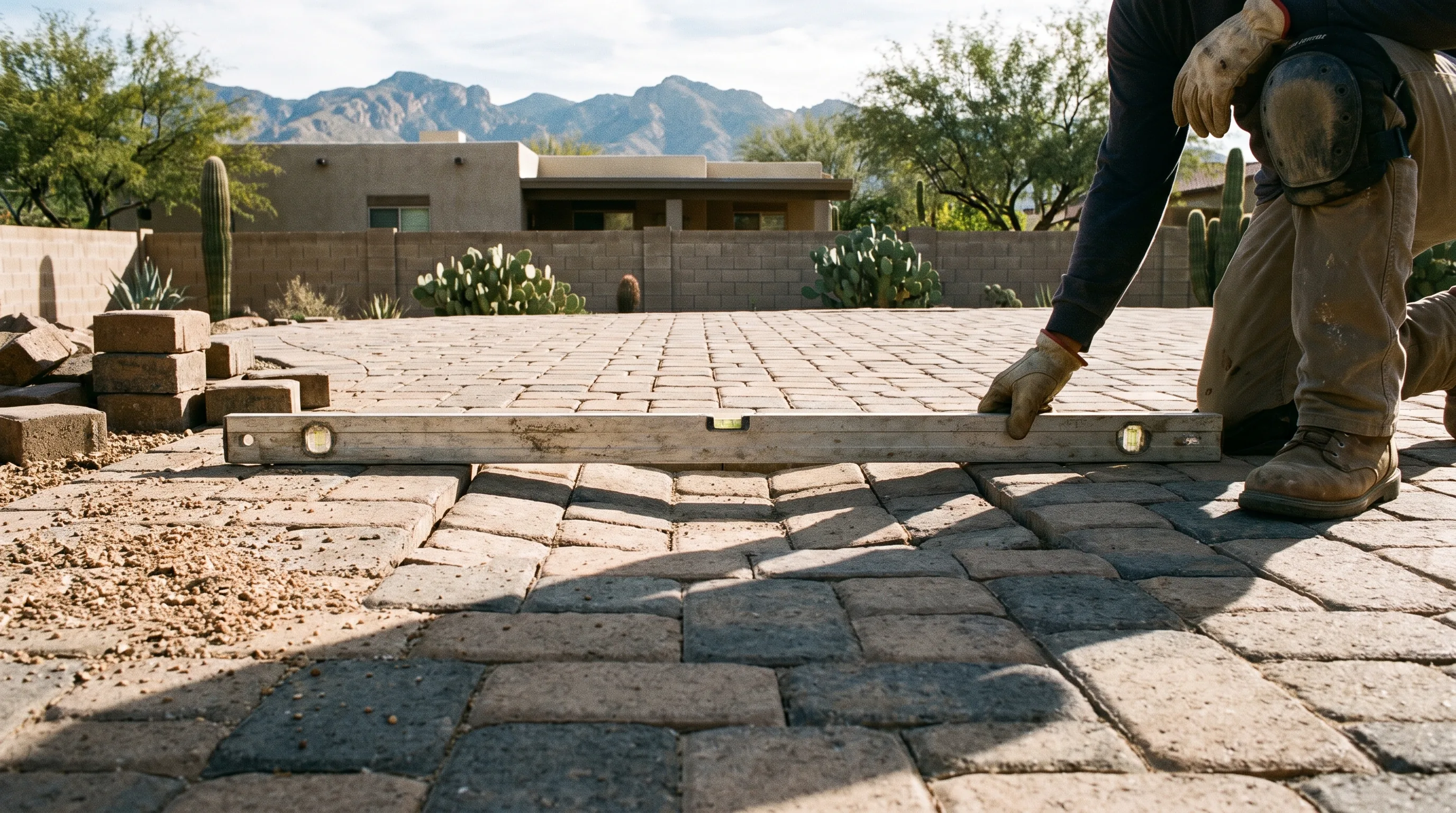
A dip in a paver patio is almost never a paver problem. It is the surface reporting on the base underneath, and there are only four common causes: the base was too thin, it was not compacted properly, water has been washing material out from under it, or the edge was never restrained.
Which one you have determines what the repair costs and whether it holds. A repair that resets the surface without addressing the cause will look correct for a season and then sink again in the same place.
What is actually happening down there
1. The base was too thin
The most common cause and the hardest to see, because it is invisible from day one. A patio with two inches of base where it needed considerably more will carry foot traffic fine and then dip wherever anything heavier sits. Under a table leg, under a planter, near a door where everyone walks the same line.
2. The base was never compacted properly
Base material has to be placed and compacted in lifts, with a machine pass on each lift. Dumped in at full depth and compacted once at the top, it looks the same and behaves completely differently. It consolidates slowly under use over the following couple of years, which is why this failure appears on that timescale.
3. Water has been washing the base out
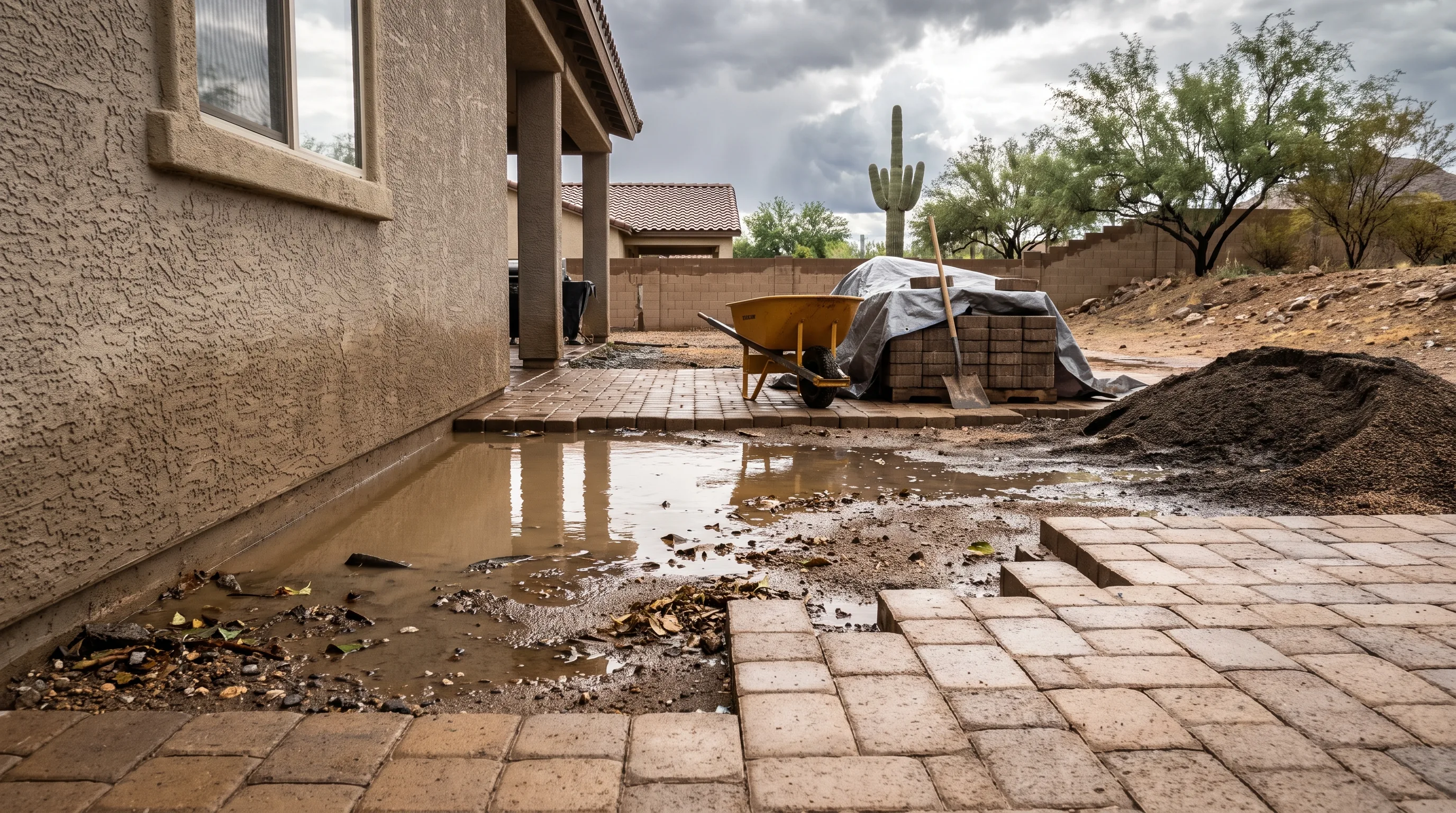
The Tucson classic. A downspout discharging onto the same spot, an irrigation leak, or surface water routed across an unrestrained edge during a monsoon storm. Each event carries fine material out from under the surface, and the loss is cumulative. This is why so many settled areas are found within a few feet of a downspout.
4. The edge was never restrained
Without restraint the outer courses migrate outward under load. The field spreads, joints open, joint sand escapes through the widened joints, and the surface loses the interlock that made it work. It usually reads as a wandering border rather than as a dip.
Reading the symptoms
A localised dip near a downspout or an irrigation head is almost always water. Follow the water before you look at anything else.
A gradual dish across a large area, developing slowly, is usually base thickness or compaction. If it appeared within the first two or three years and has been slowly getting worse, that is consolidation.
An edge that has moved outward with wide joints near the border is a restraint failure, and the dip in the middle is secondary to it.
Pavers that rock individually when stepped on but sit at the right level generally mean joint sand has gone, so the units are no longer sharing load.
The difference between a fix and a delay
The cheap version is to lift the sunken pavers, throw sand underneath, tap them level and leave. It costs very little and it is flat again for a season.
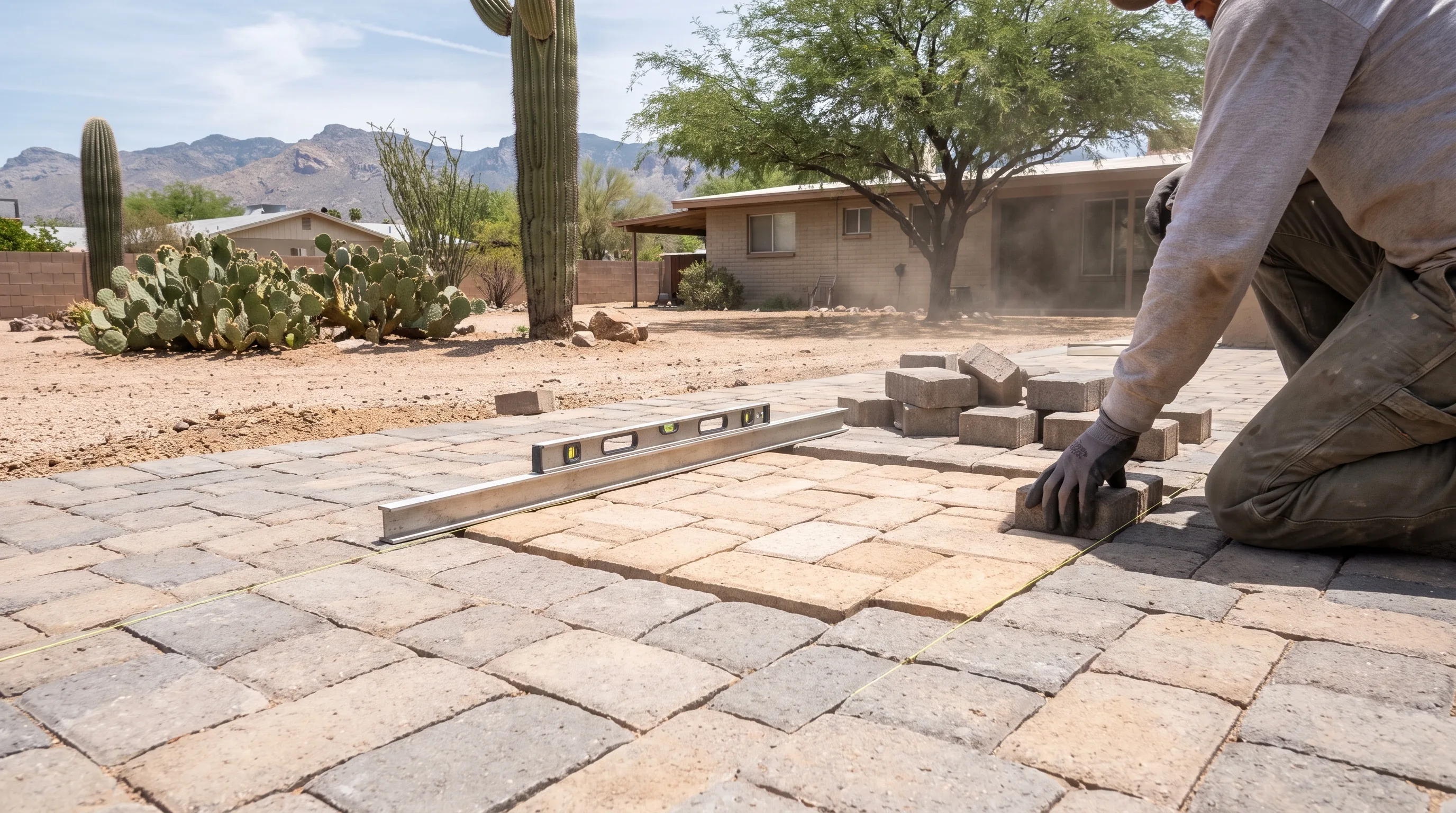
A real repair does four things. It finds and fixes the cause first, whether that is redirecting a downspout, repairing an irrigation line or regrading so surface water goes somewhere else. It lifts the affected area, keeping the pavers in order so they go back the way they came out. It rebuilds the base to the correct depth and compacts it in lifts. And it addresses the edge, because a repair inside an unrestrained field will move again.
The pavers themselves are almost always reusable. That means most of the cost is labour and the material bill is small, which is one of the real advantages of this surface over concrete.
Where the patio meets the wall
The joint between a patio and the house is worth its own paragraph, because it causes a disproportionate share of problems.
Water arriving at that line has to be able to leave. If the patio falls toward the house, water sits against the wall, works into the base, and eventually undermines the surface right where you most do not want it to. A patio should always fall away from the structure.
The joint itself should be detailed rather than simply butted tight. It has to accommodate small independent movement between the house and the surface, and it has to shed water rather than funnel it downward. A hard mortared joint at that line is usually the wrong answer.
Sooner is genuinely cheaper here
Settlement is progressive. The same water that caused the first dip keeps working, and the affected area keeps growing. A repair to a small area is a straightforward job. The same failure ignored for three more monsoon seasons can involve most of the patio.
If you can see a dip that holds water, a border that has moved, or pavers that rock underfoot, that is the moment.