Paver Patios
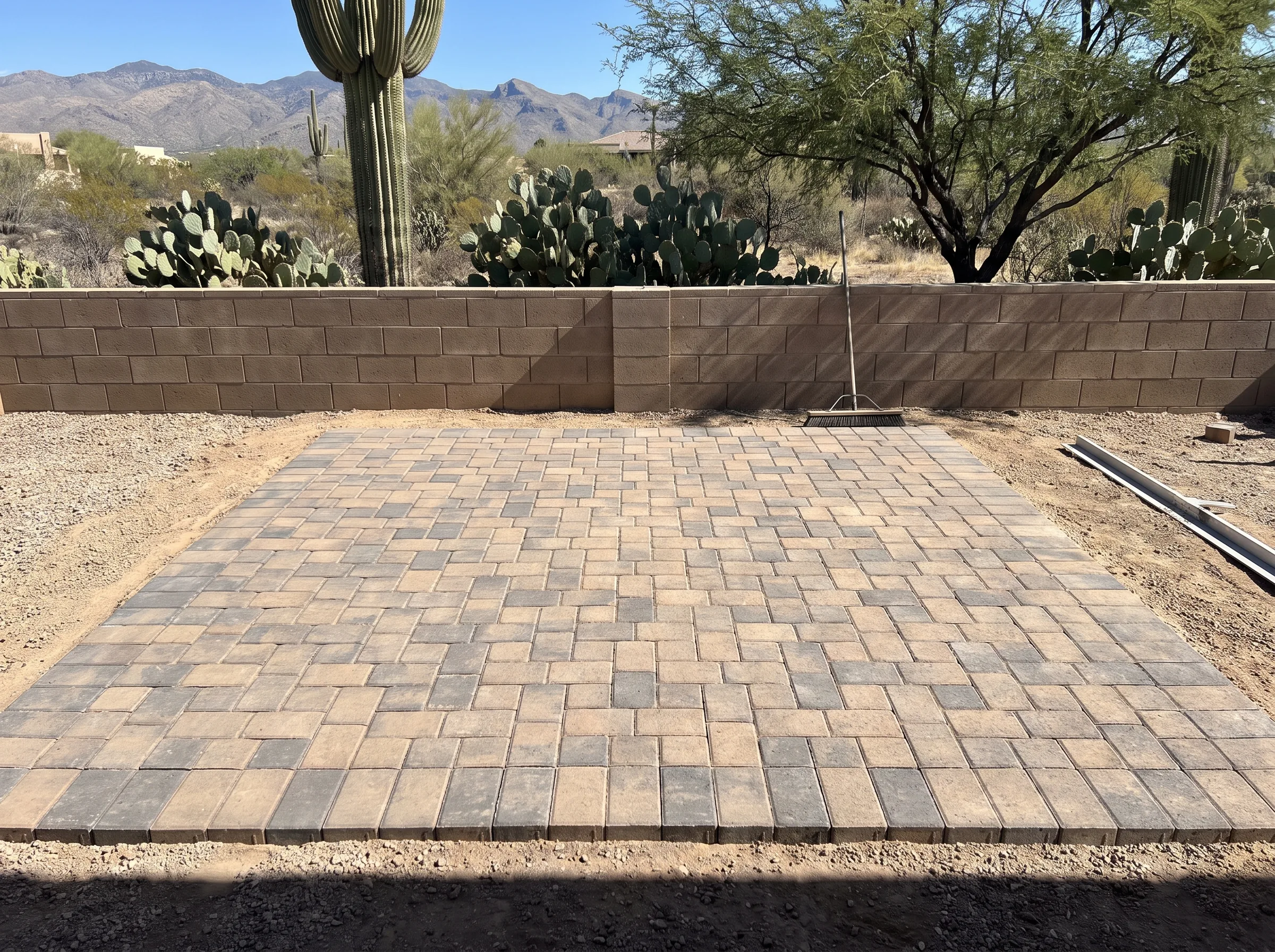
Interlocking paver patios on a properly compacted base, laid to drain away from the house.
See the detail
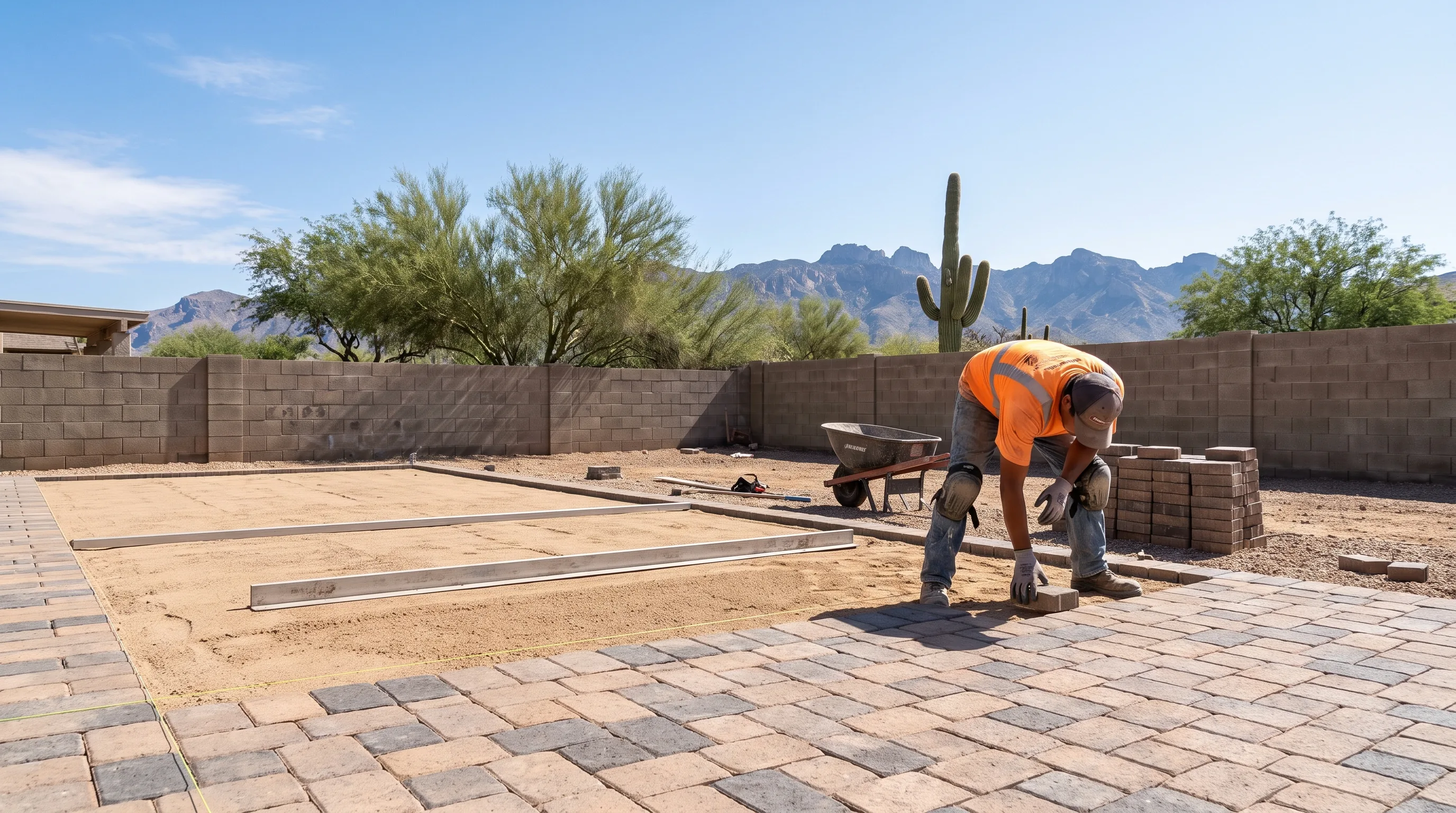
Free on site quotes across Pima County
Paver patios, driveways, walls, concrete, turf, shade and fire features. Built on a base that holds in caliche ground and drains when the monsoon arrives.
[ 01 ]Below the surface
A settled patio, a driveway that ruts under the truck, a wall that bulges after three summers, a slab that cracks across the middle in year two. Almost none of those are material failures. They are base failures, drainage failures, or a footing that never went deep enough to get past the loose surface layer.
That is the part of the job you cannot inspect once it is finished, which is exactly why it is the part that gets cut. It is invisible in a quote and invisible in a photograph, and skipping it is the fastest way for a contractor to win on price.
We build the other way round. Excavation depth, base course, compaction, edge restraint and where the water goes are settled before a single paver, block or yard of concrete arrives. What you see on the surface is the easy part.
[ 02 ]Twenty one services
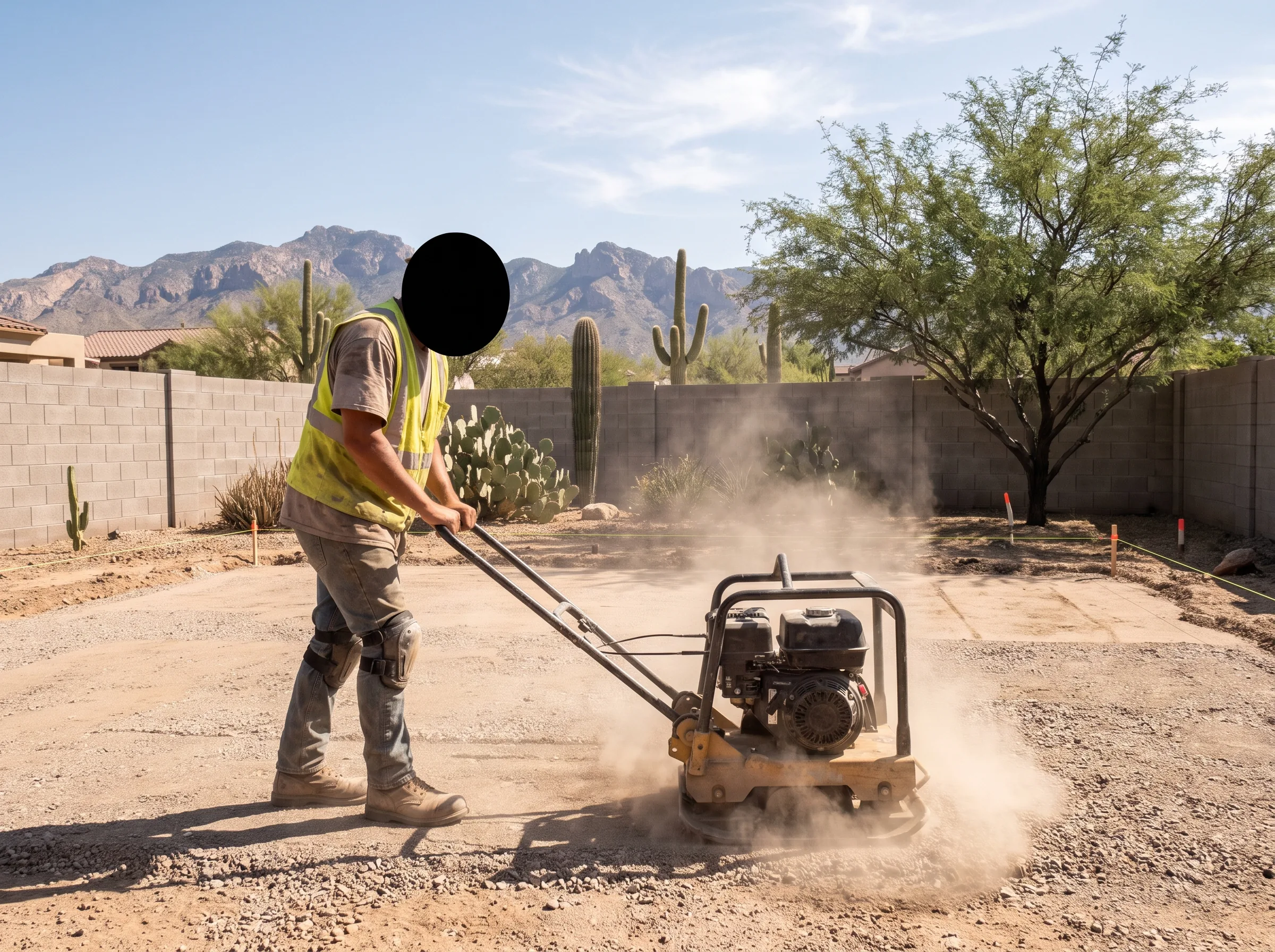
Interlocking paver patios on a properly compacted base, laid to drain away from the house.
See the detail
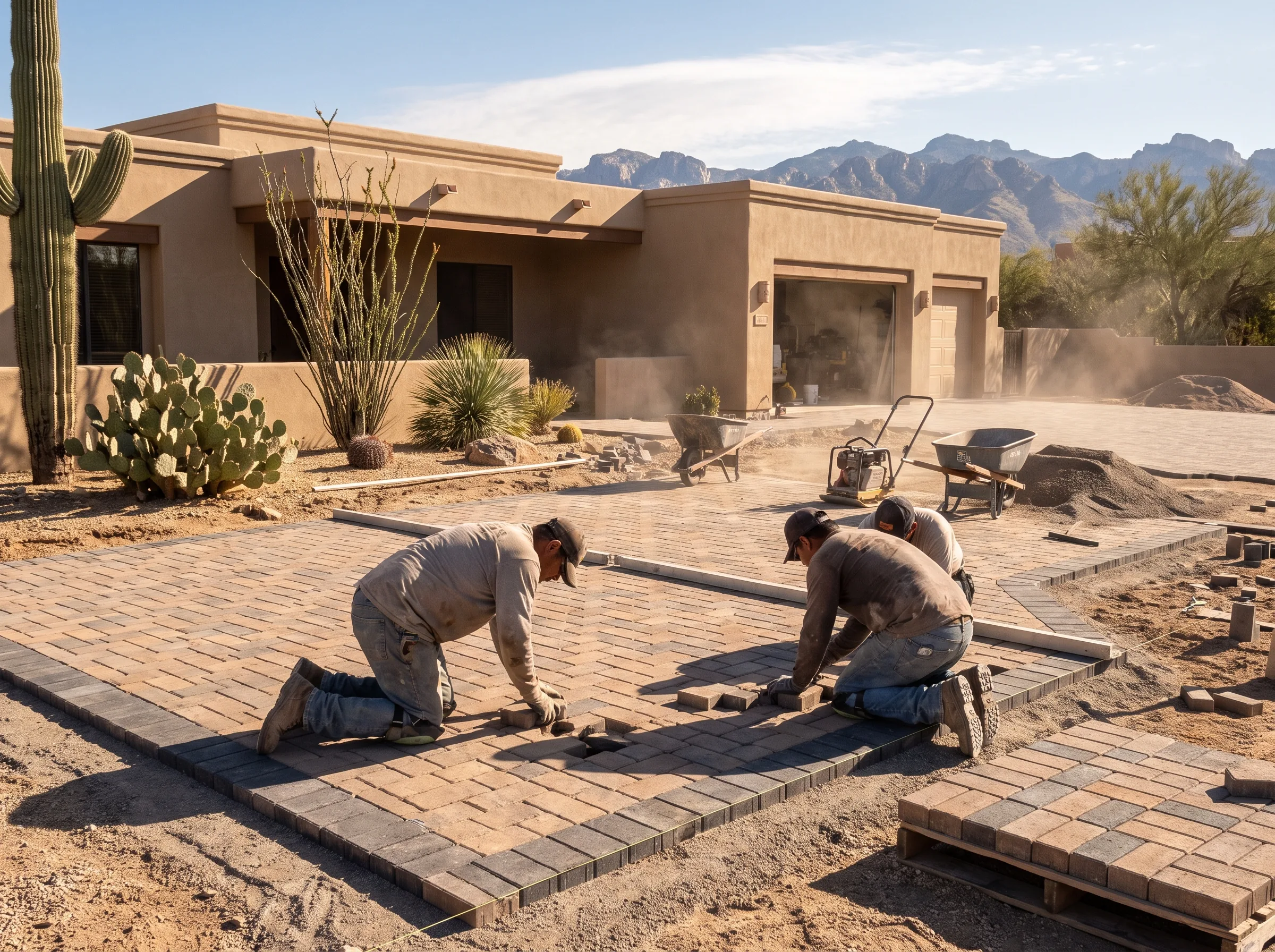
Driveway pavers built to a vehicle base spec, so they carry weight without rutting or spreading.
See the detail
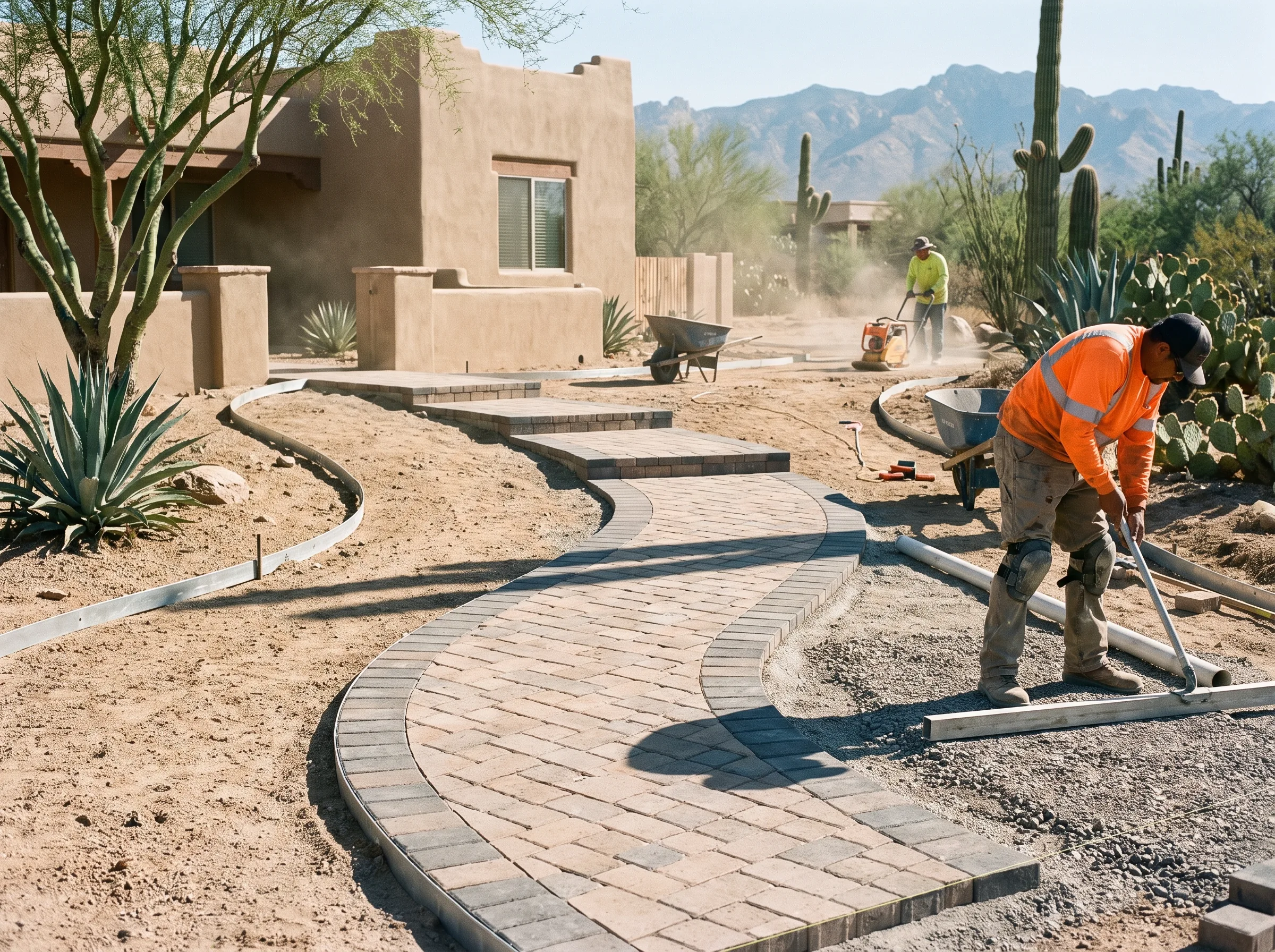
Paths, side yards and entry steps, set with consistent rise and run and edged to hold their line.
See the detail
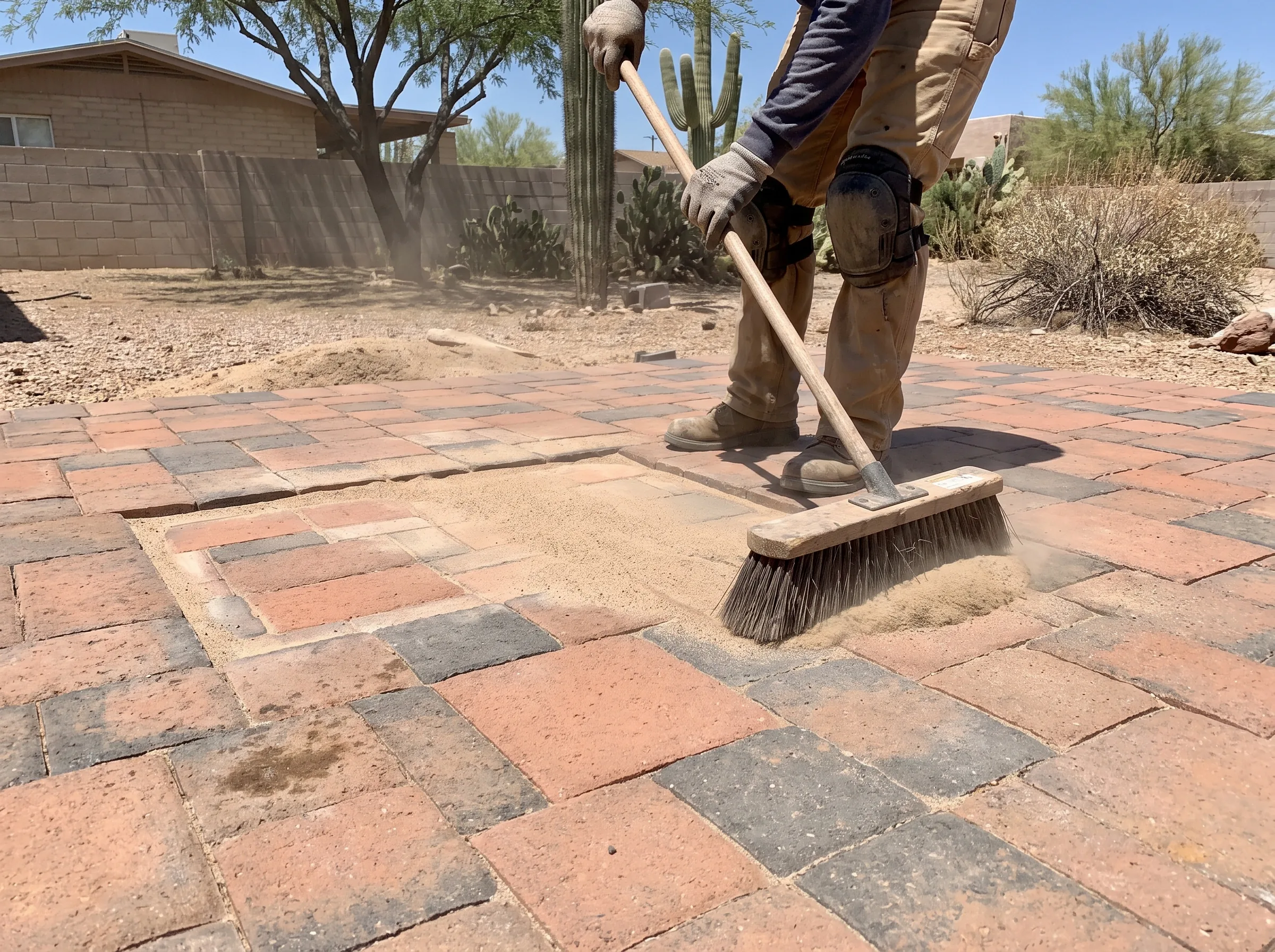
Releveling settled areas, replacing failed joint sand, and sealing that suits Tucson sun rather than fighting it.
See the detail
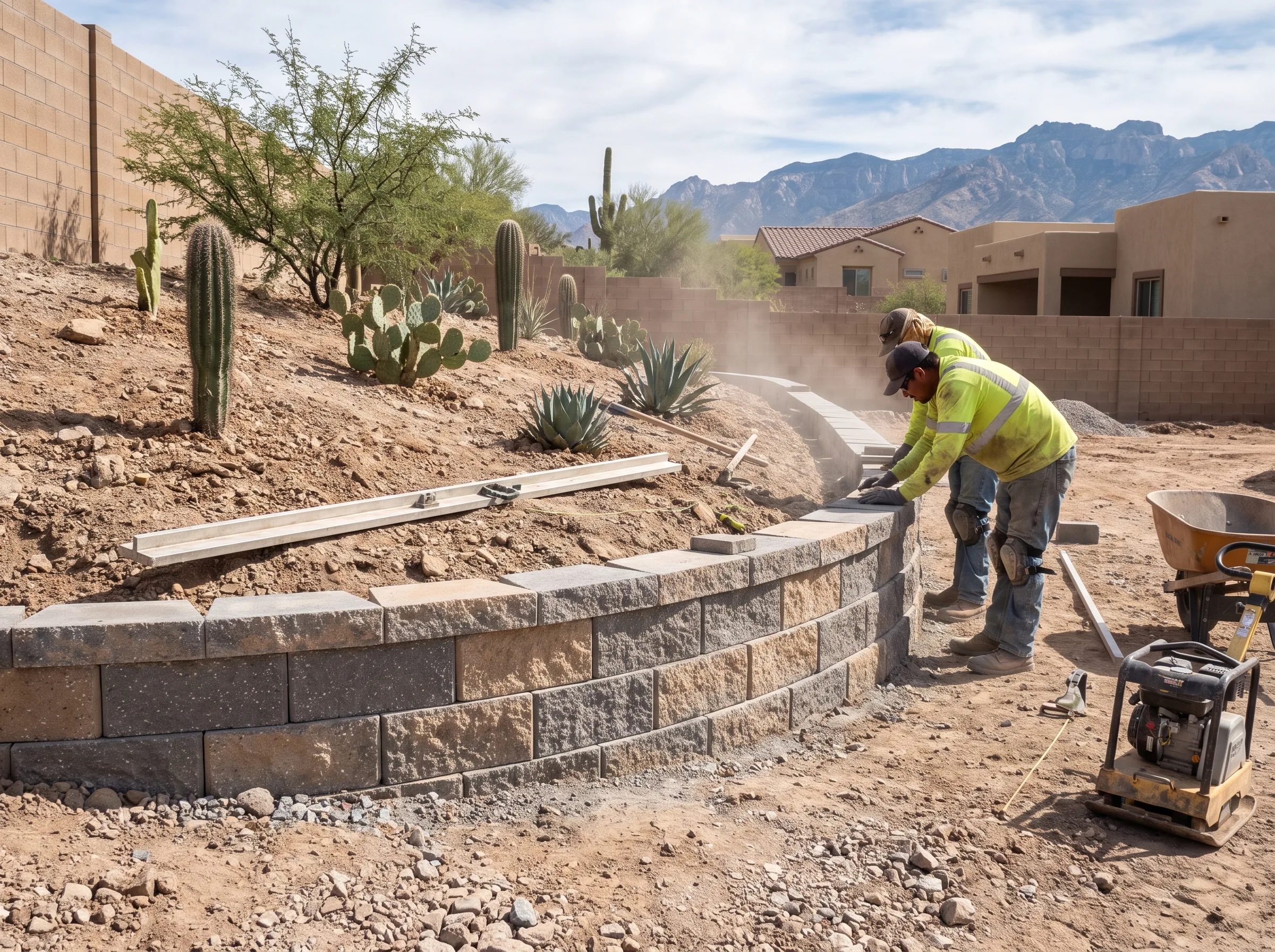
Engineered retaining walls with real drainage behind them, which is what decides whether a wall lasts.
See the detail
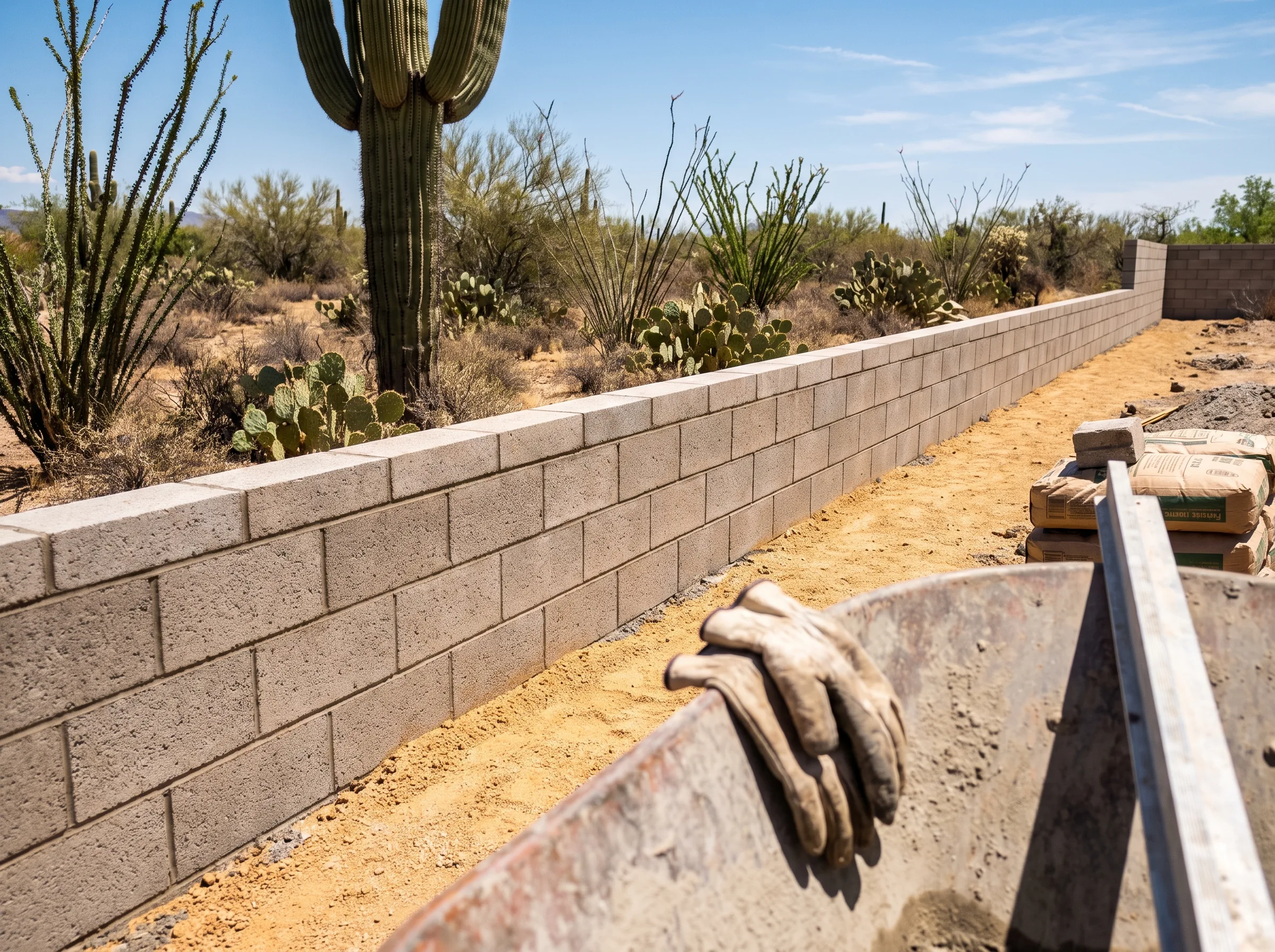
Slump block and CMU perimeter walls, finished in stucco or left natural to match the neighbourhood.
See the detail
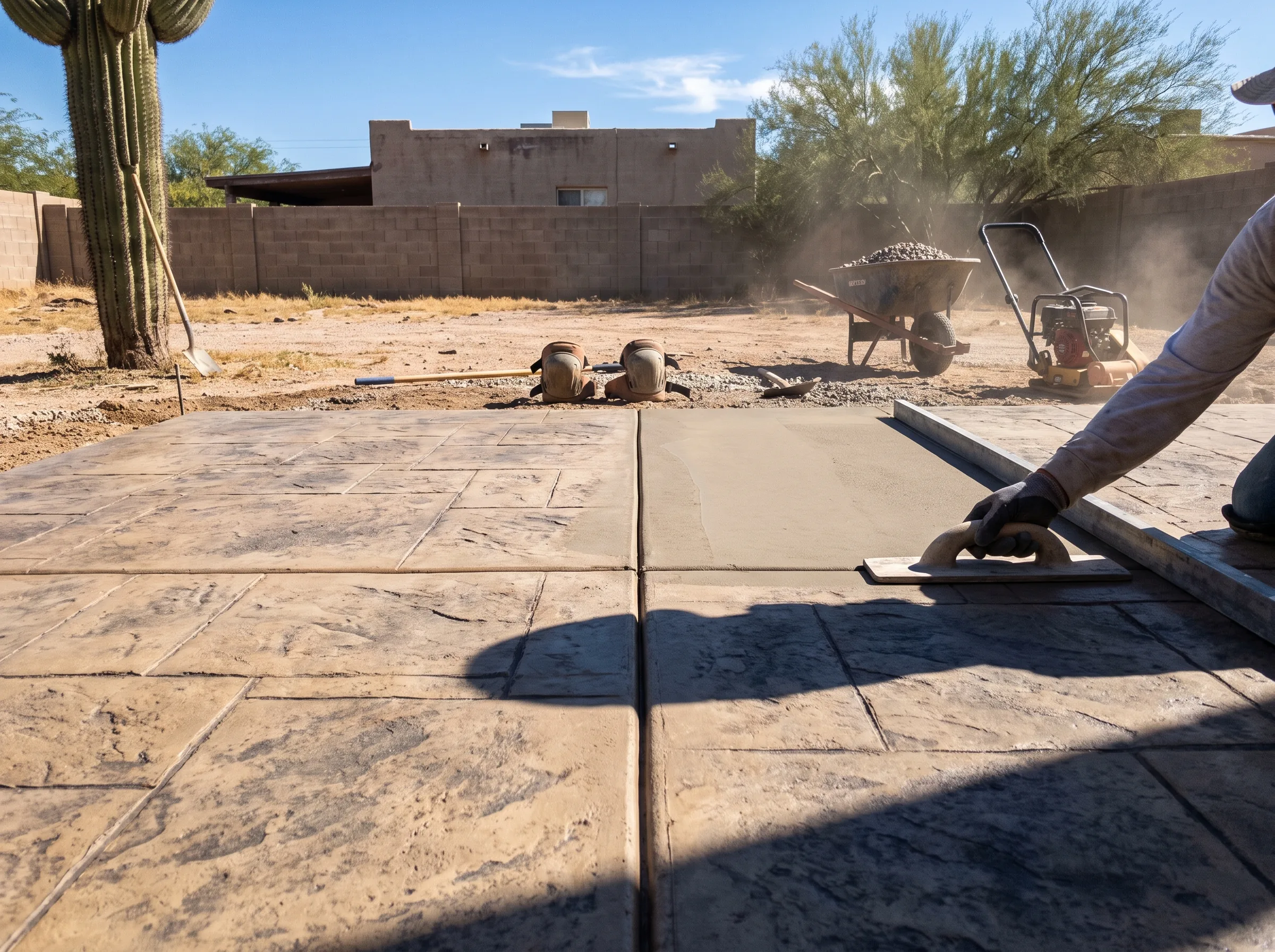
Stamped, coloured and broom finished concrete, with control joints placed where the slab will actually crack.
See the detail
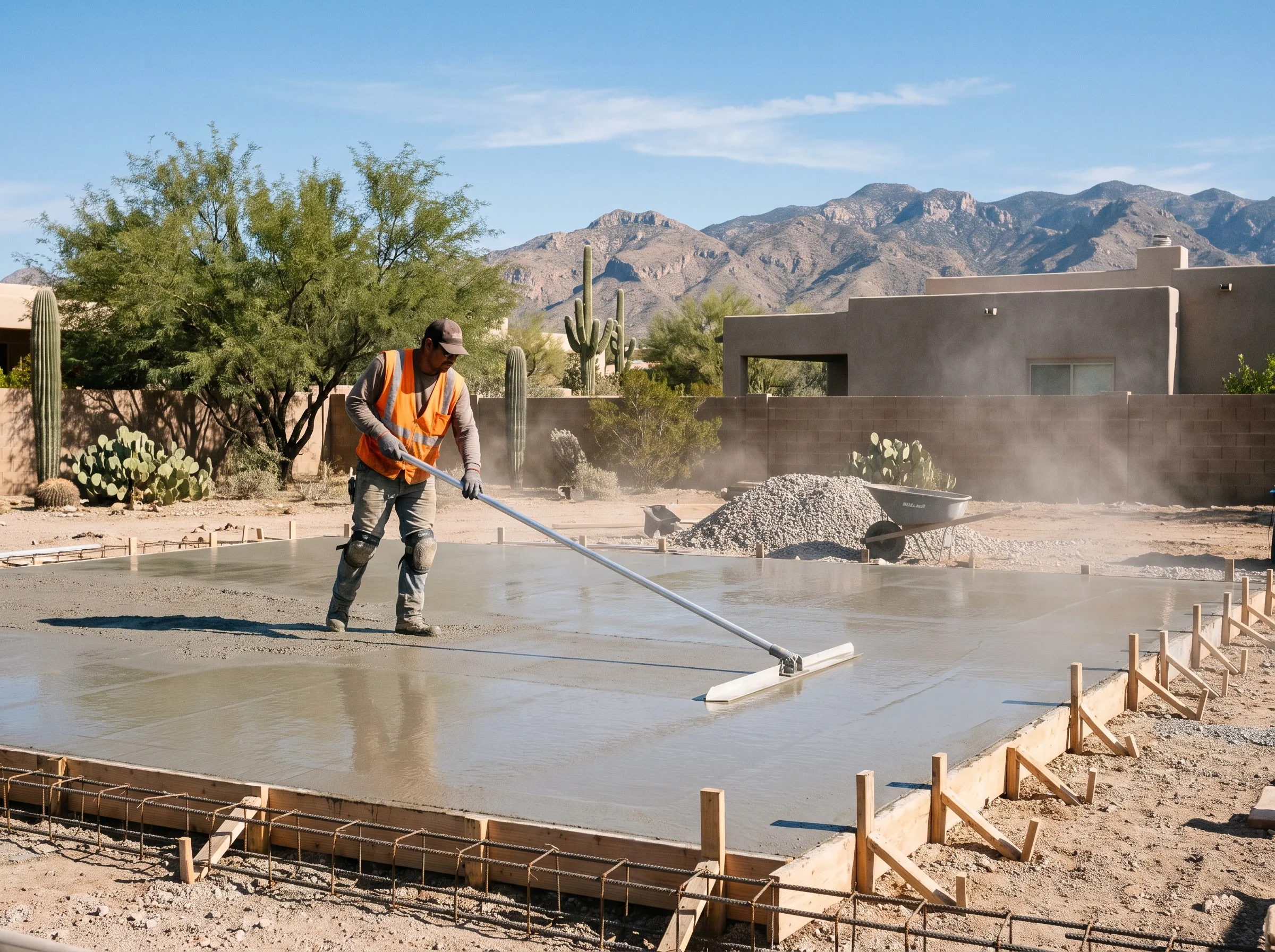
Poured slabs and driveways, correctly thickened and reinforced for caliche ground and vehicle loads.
See the detail
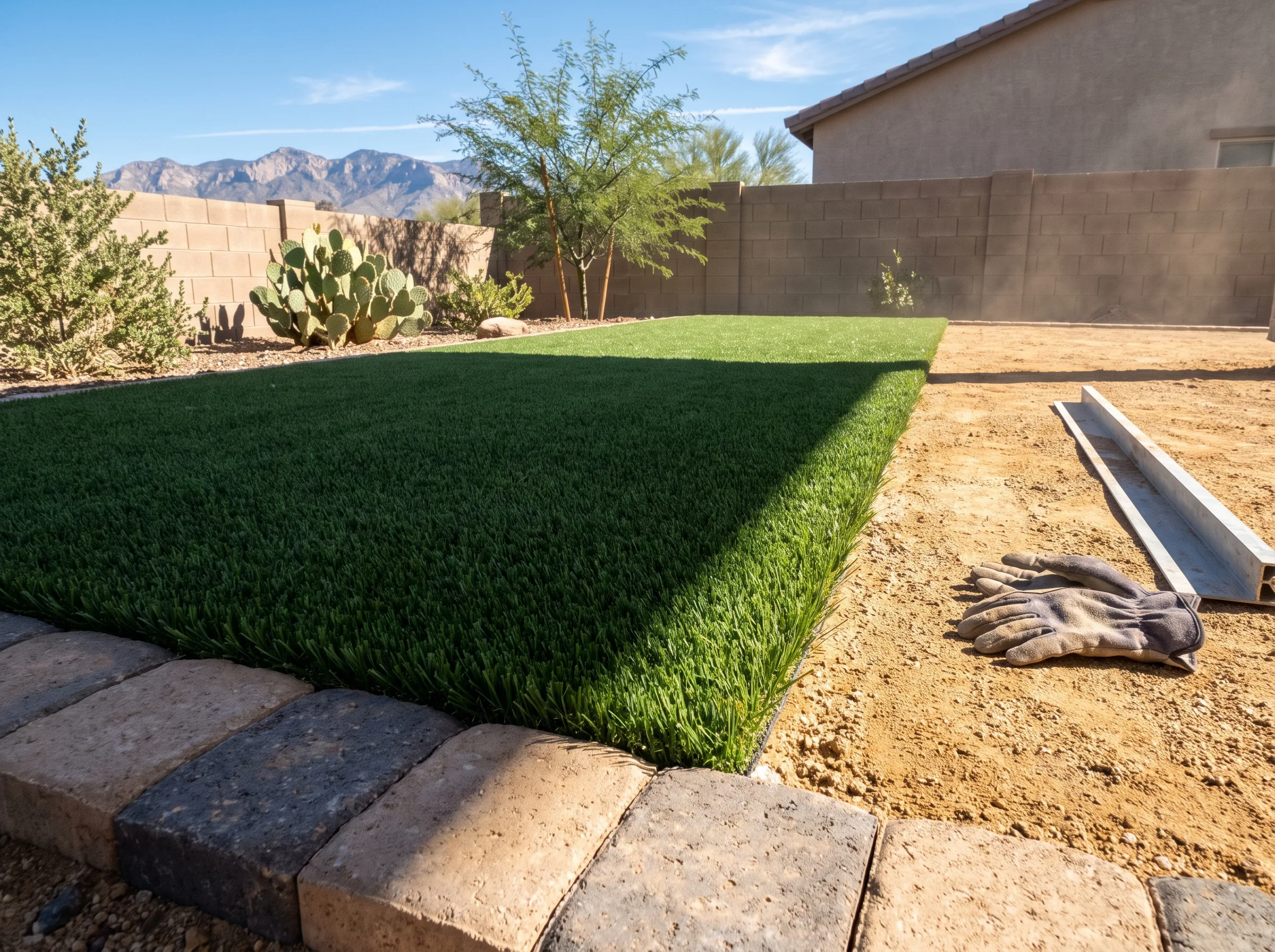
Synthetic lawn over a drainage base, with infill and blade spec chosen for desert heat and dogs.
See the detail
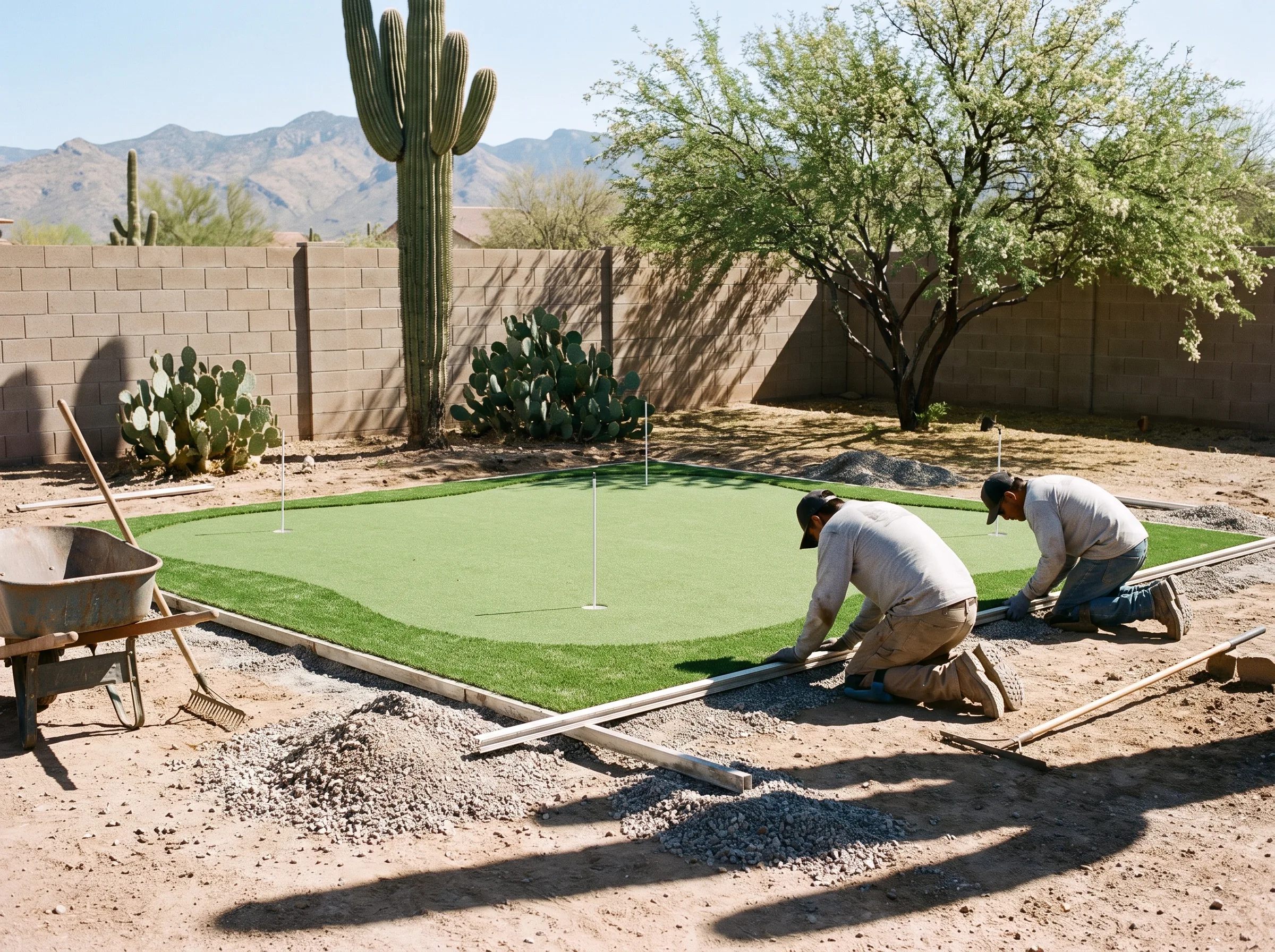
Backyard greens with real contour and roll, built on the same base standard as the turf.
See the detail
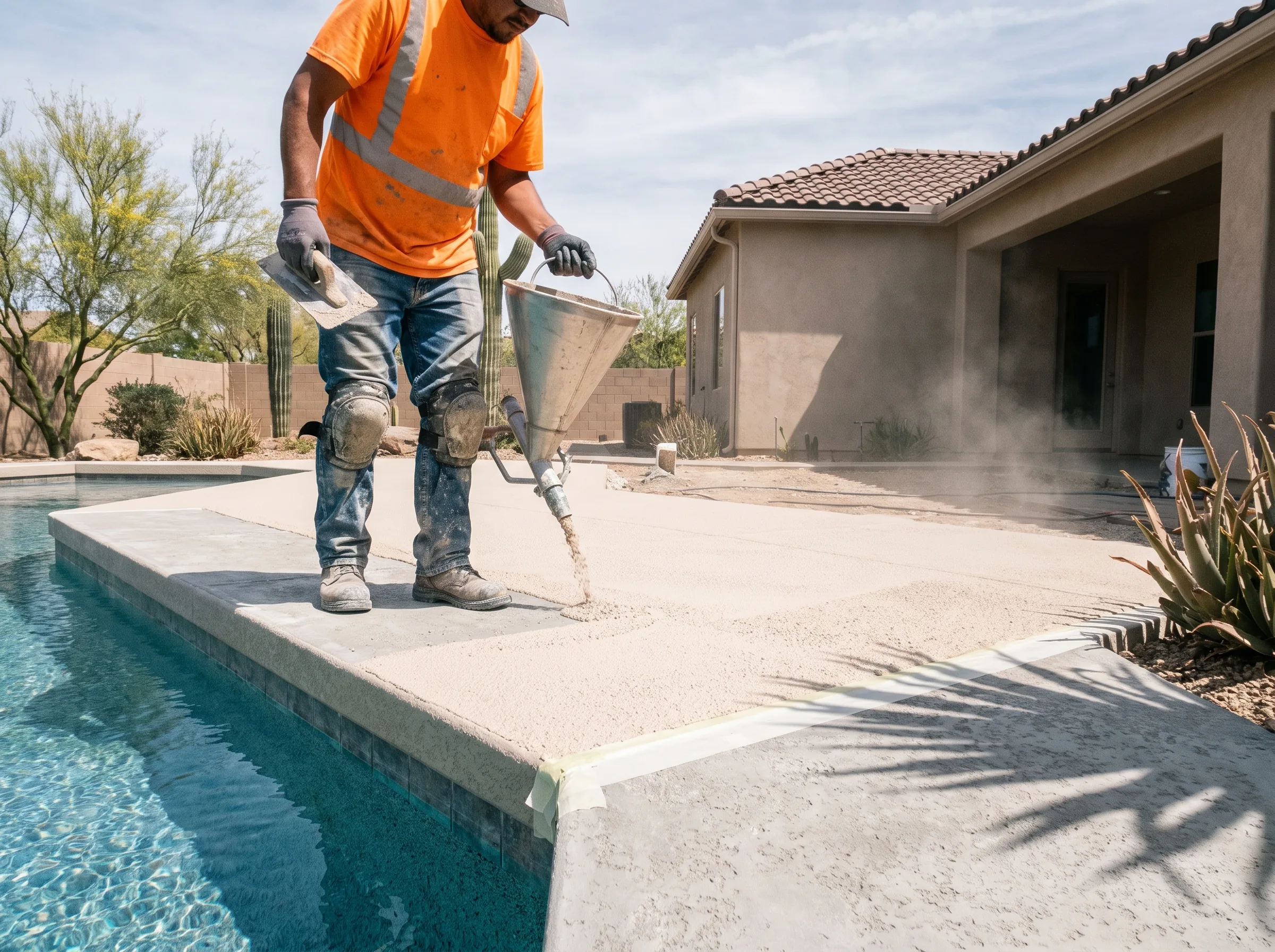
Overlays and cool deck finishes for pool surrounds that have cracked, faded or got too hot to stand on.
See the detail
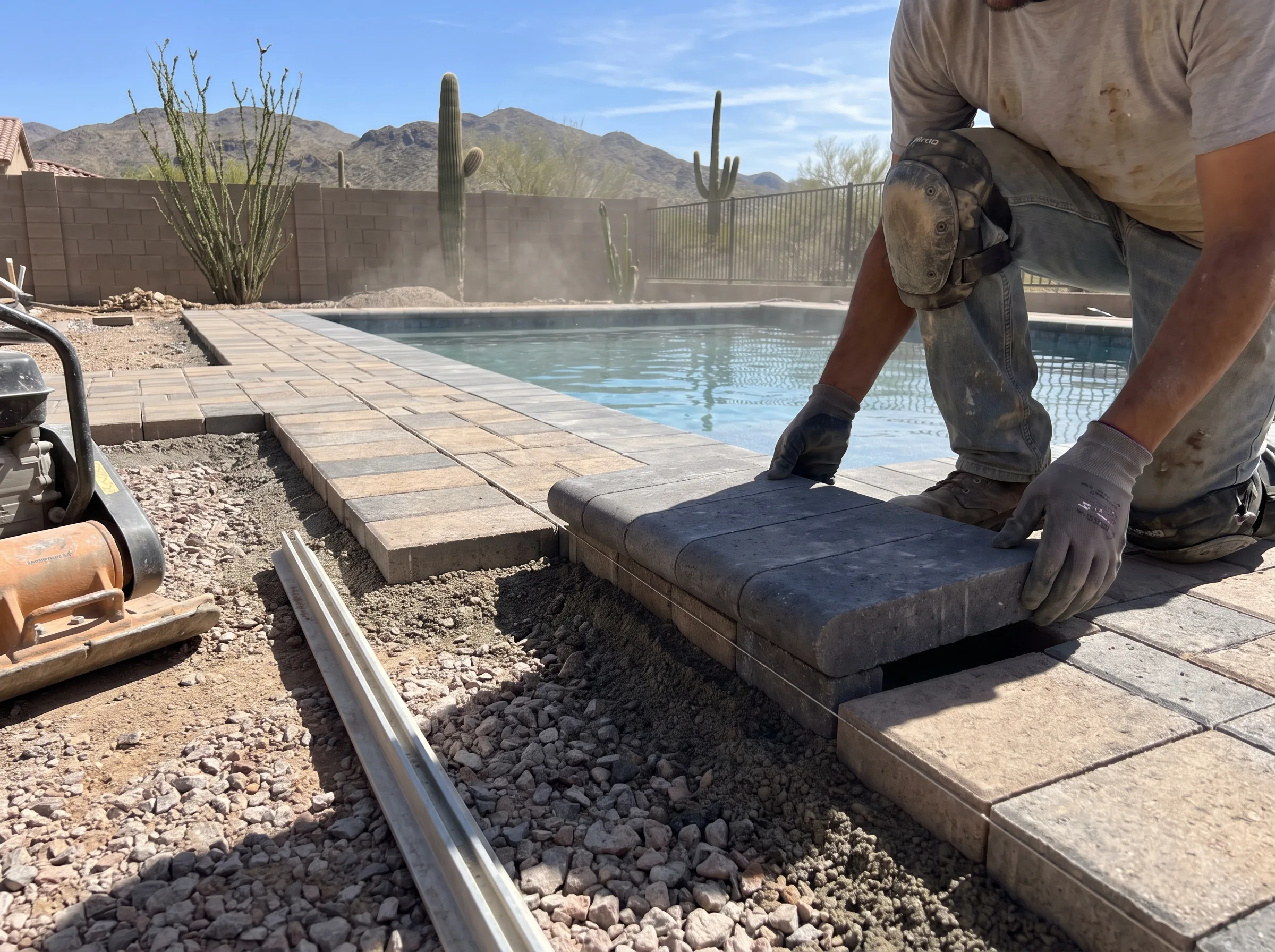
Paver pool decks and coping, laid to drain away from the water and to stay cooler underfoot.
See the detail
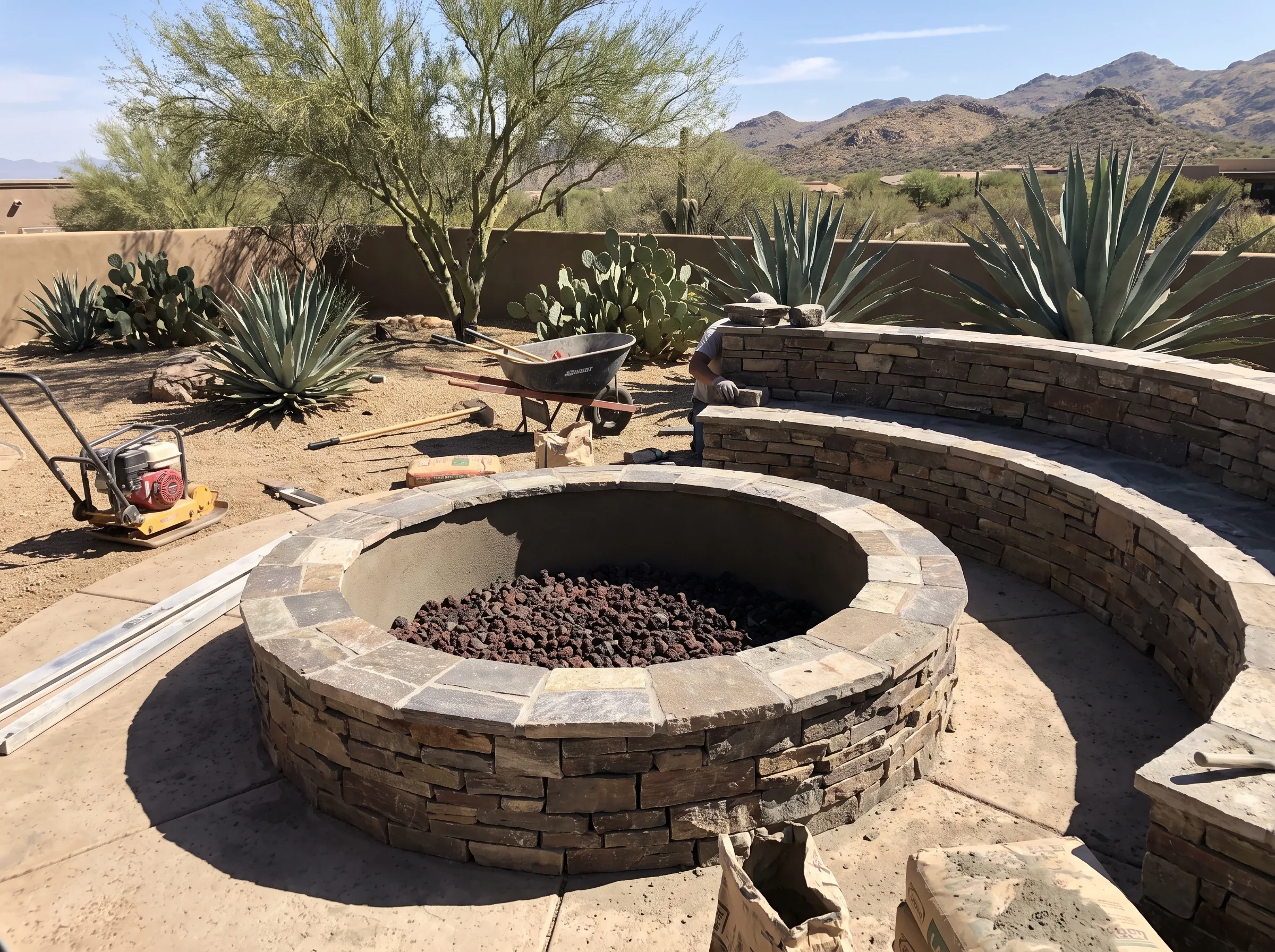
Gas and wood fire features built in block and finished to match the rest of the hardscape.
See the detail
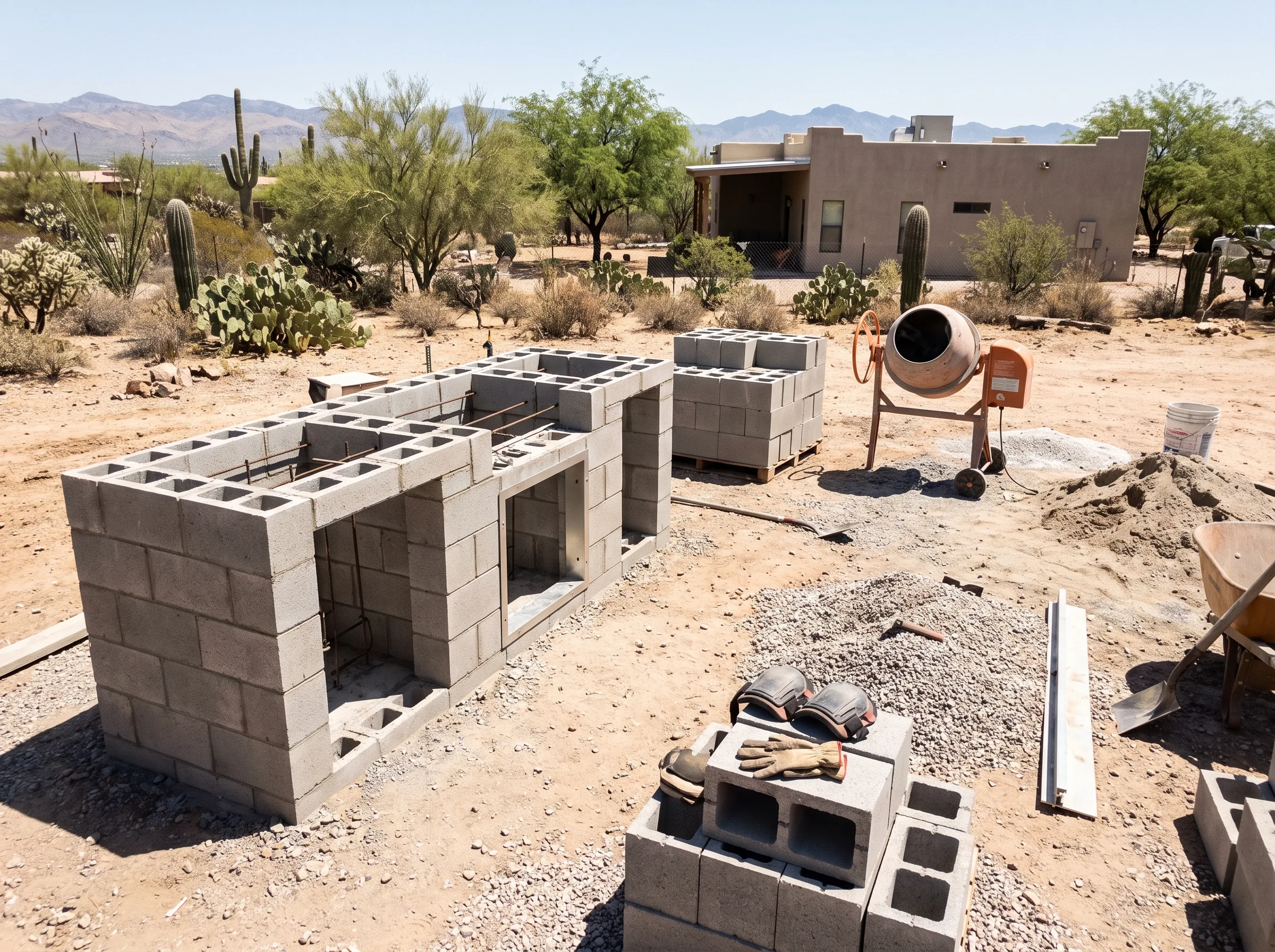
Block built cooking islands and full outdoor kitchens, sized around the appliances you actually want.
See the detail
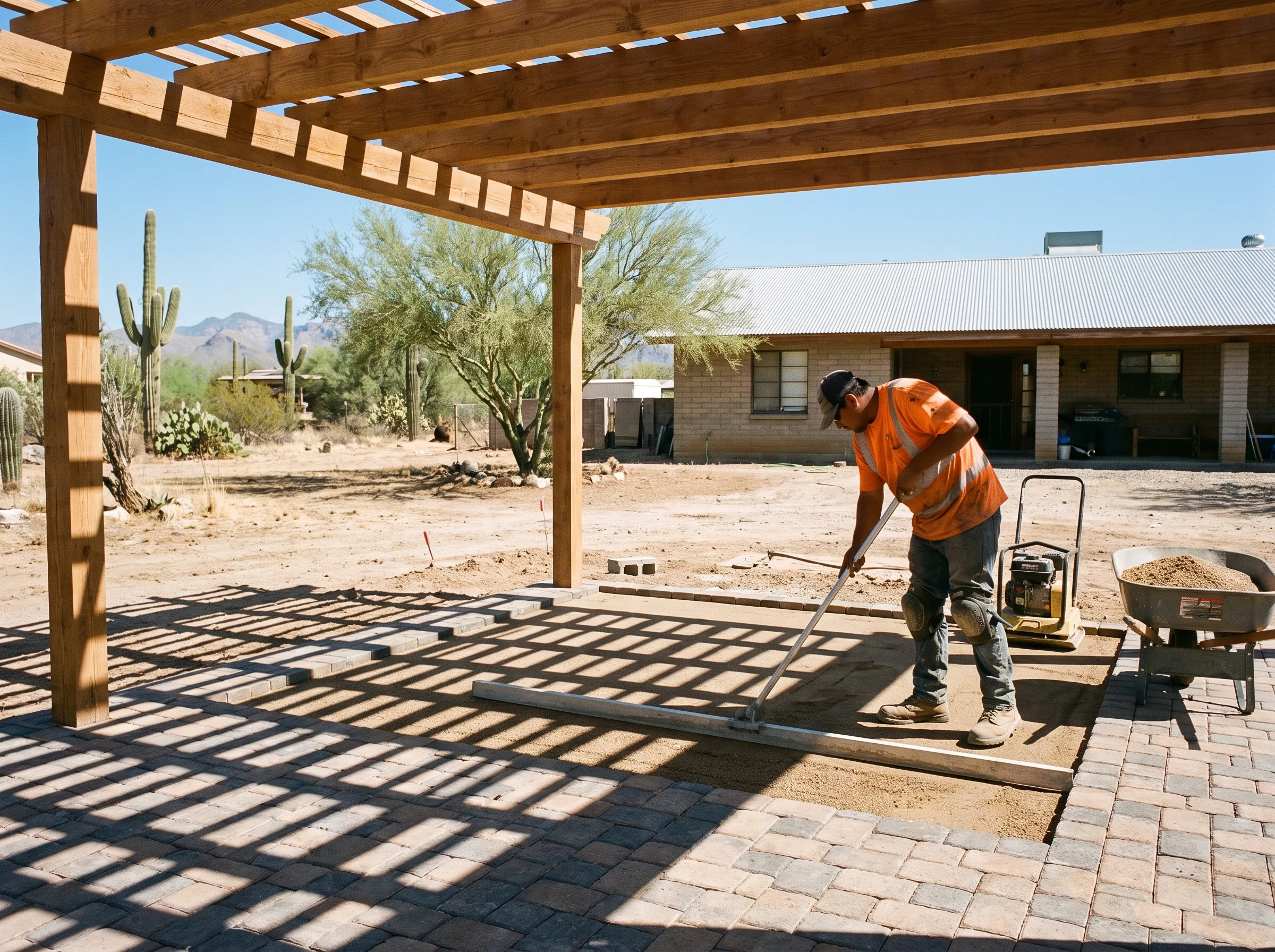
Shade structures engineered for monsoon wind loading and set to the sun angle your yard really gets.
See the detail
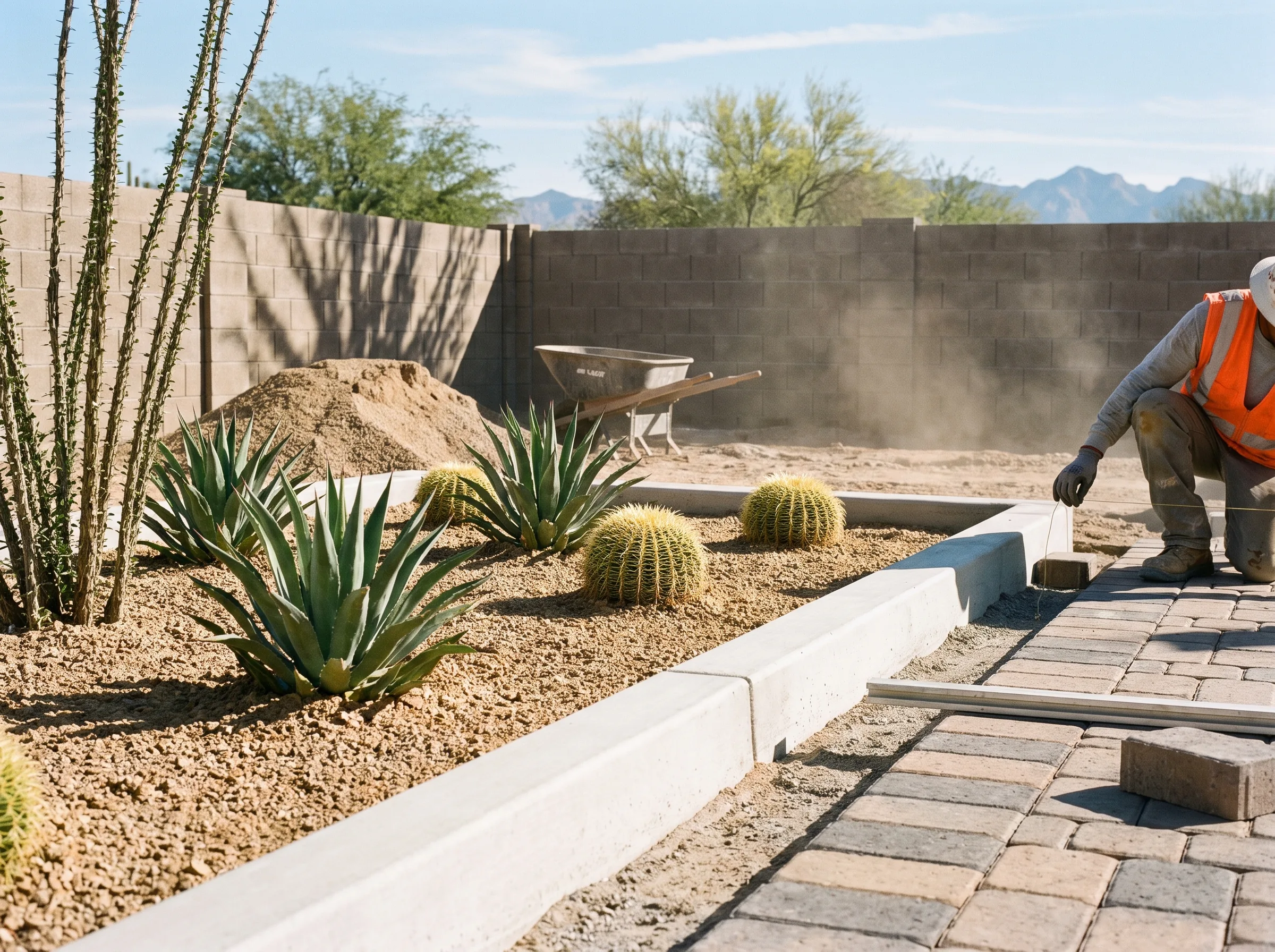
The planted side of the yard, designed around the hardscape rather than bolted on afterwards.
See the detail
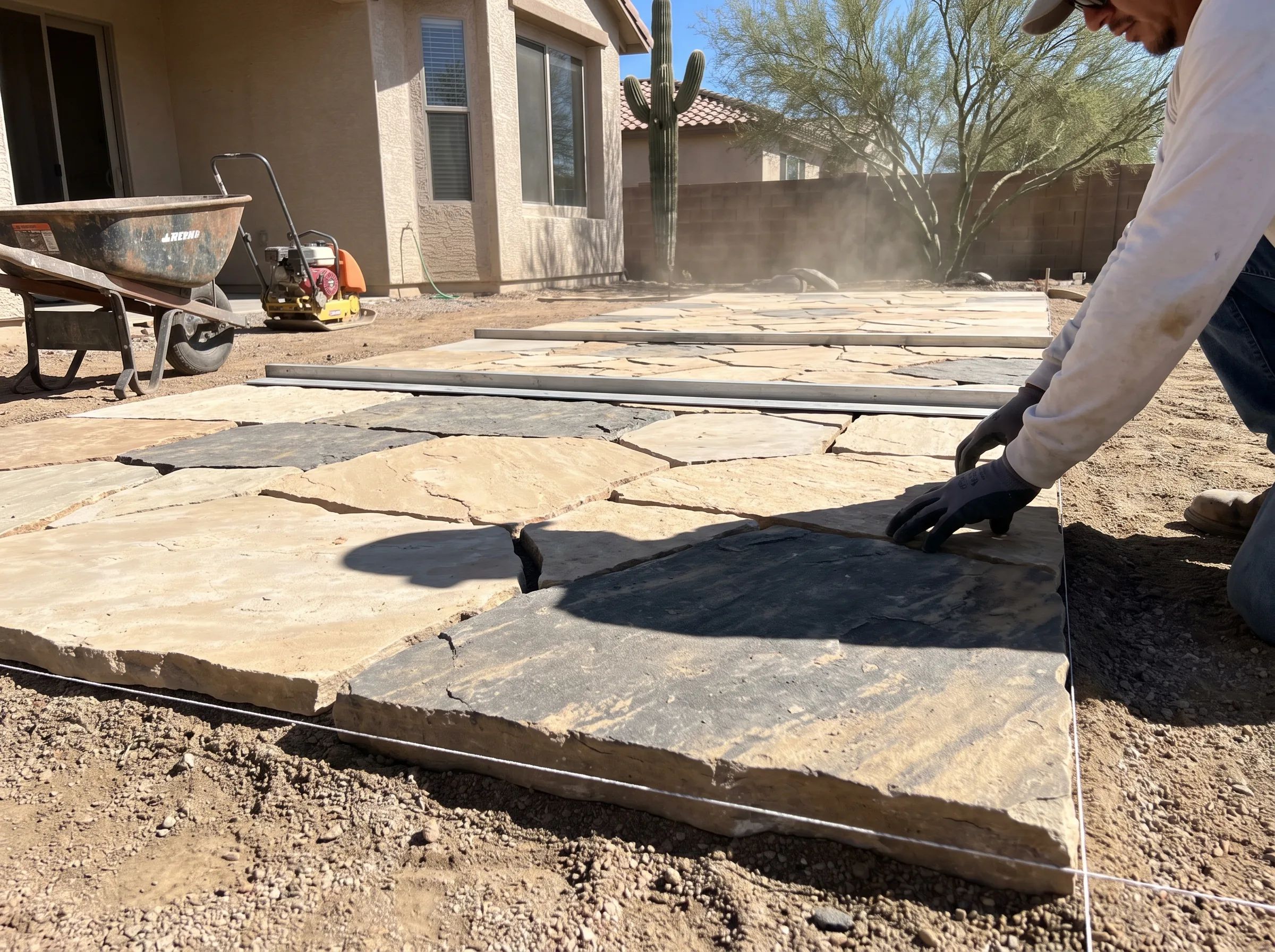
Natural stone patios and decks where a cut paver look is not what you are after.
See all services
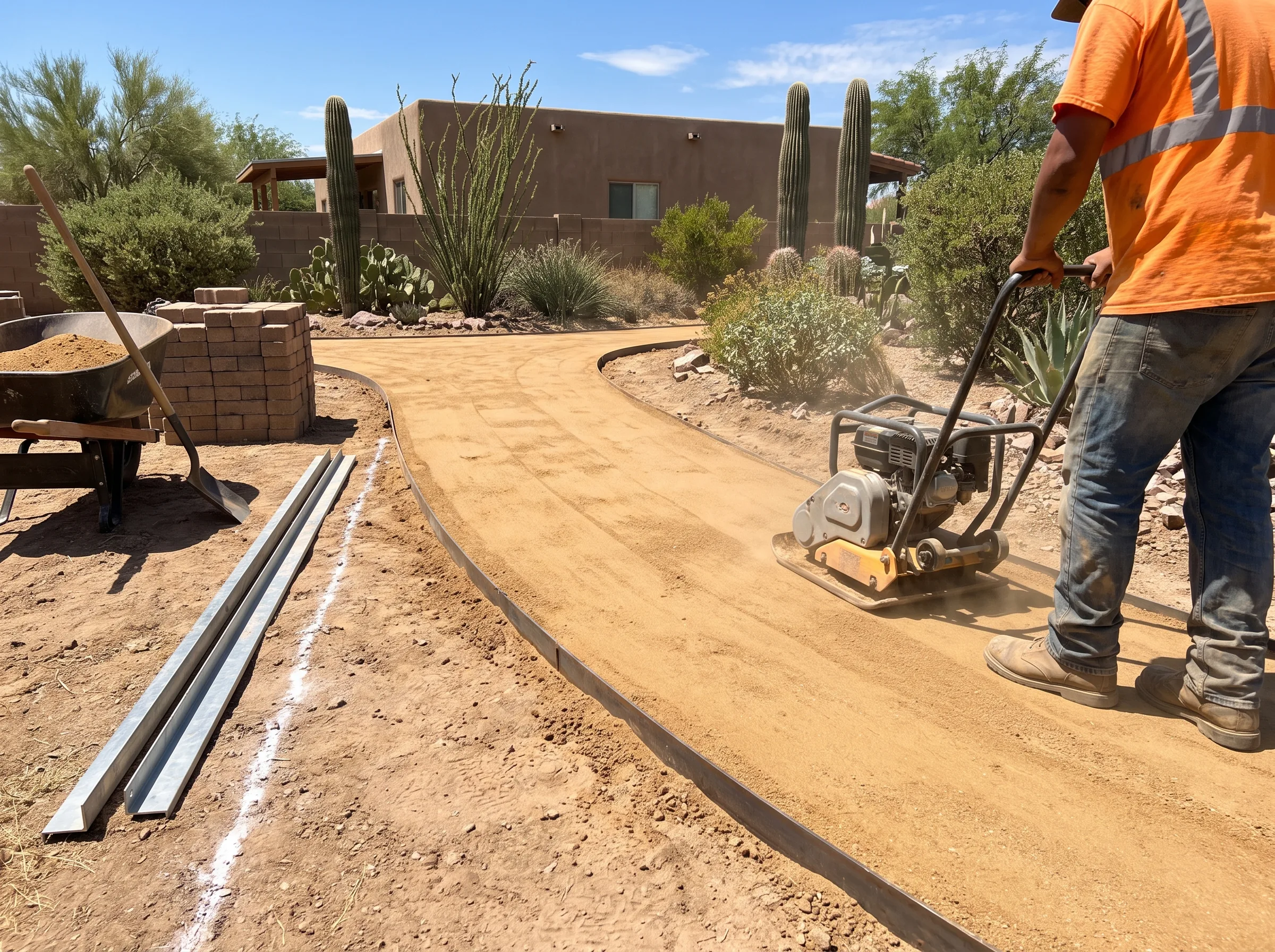
DG paths, stabilised areas and gravel fields, graded and edged so they stay where they were put.
See all services
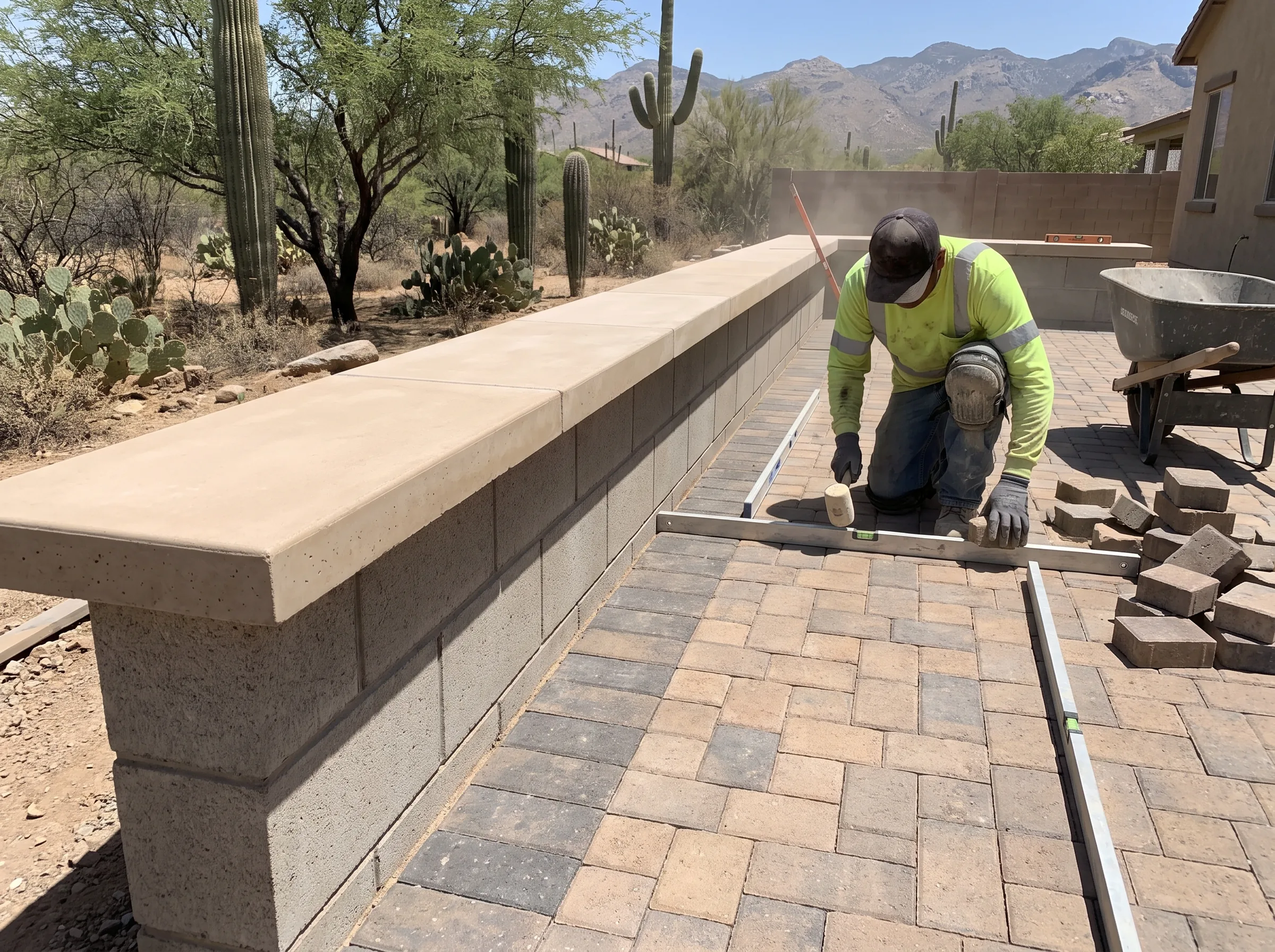
Low walls that double as seating, and built in planters that match the hardscape.
See all services
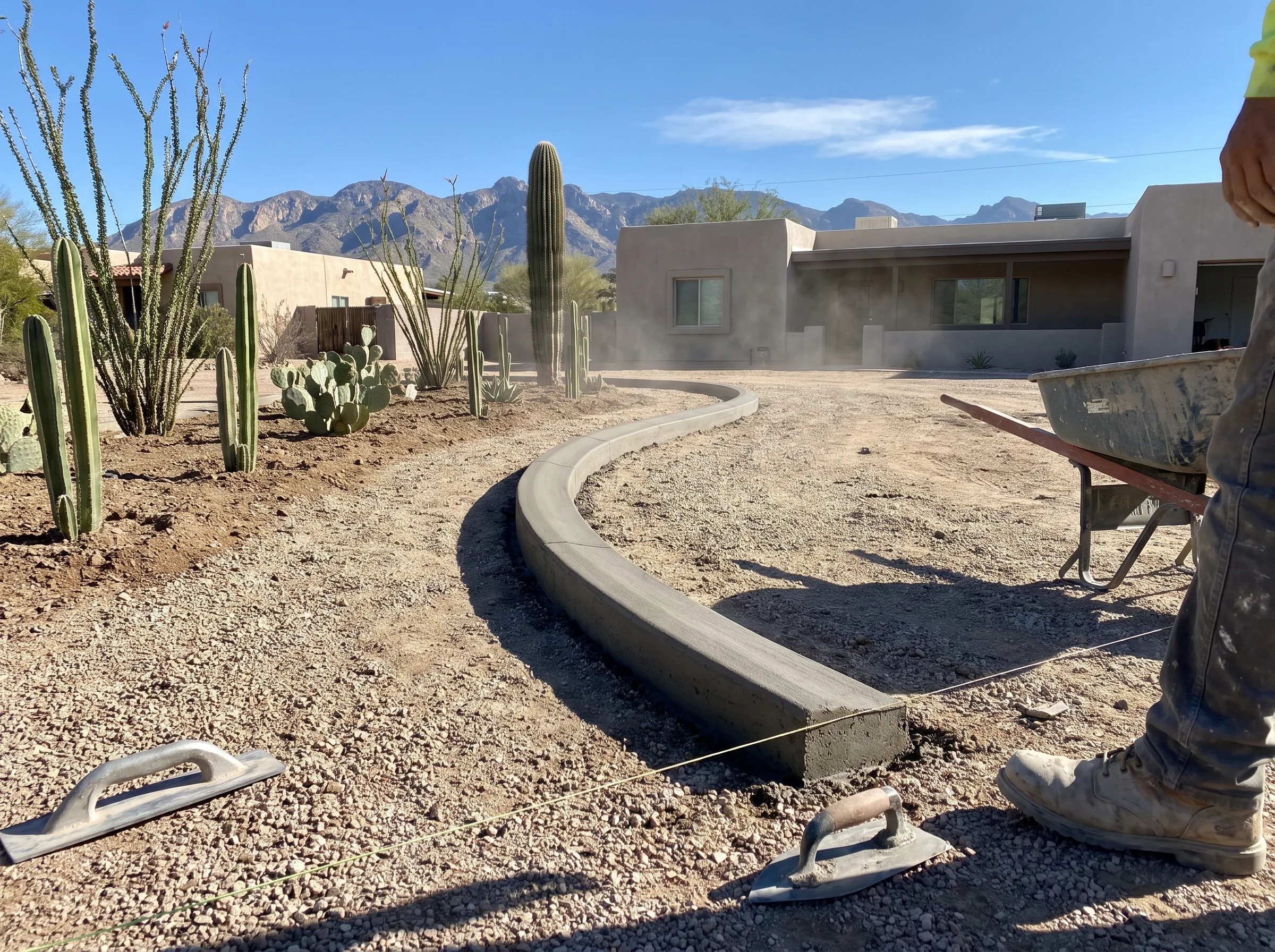
Extruded concrete curbing to hold gravel, DG and planting beds in place.
See all services
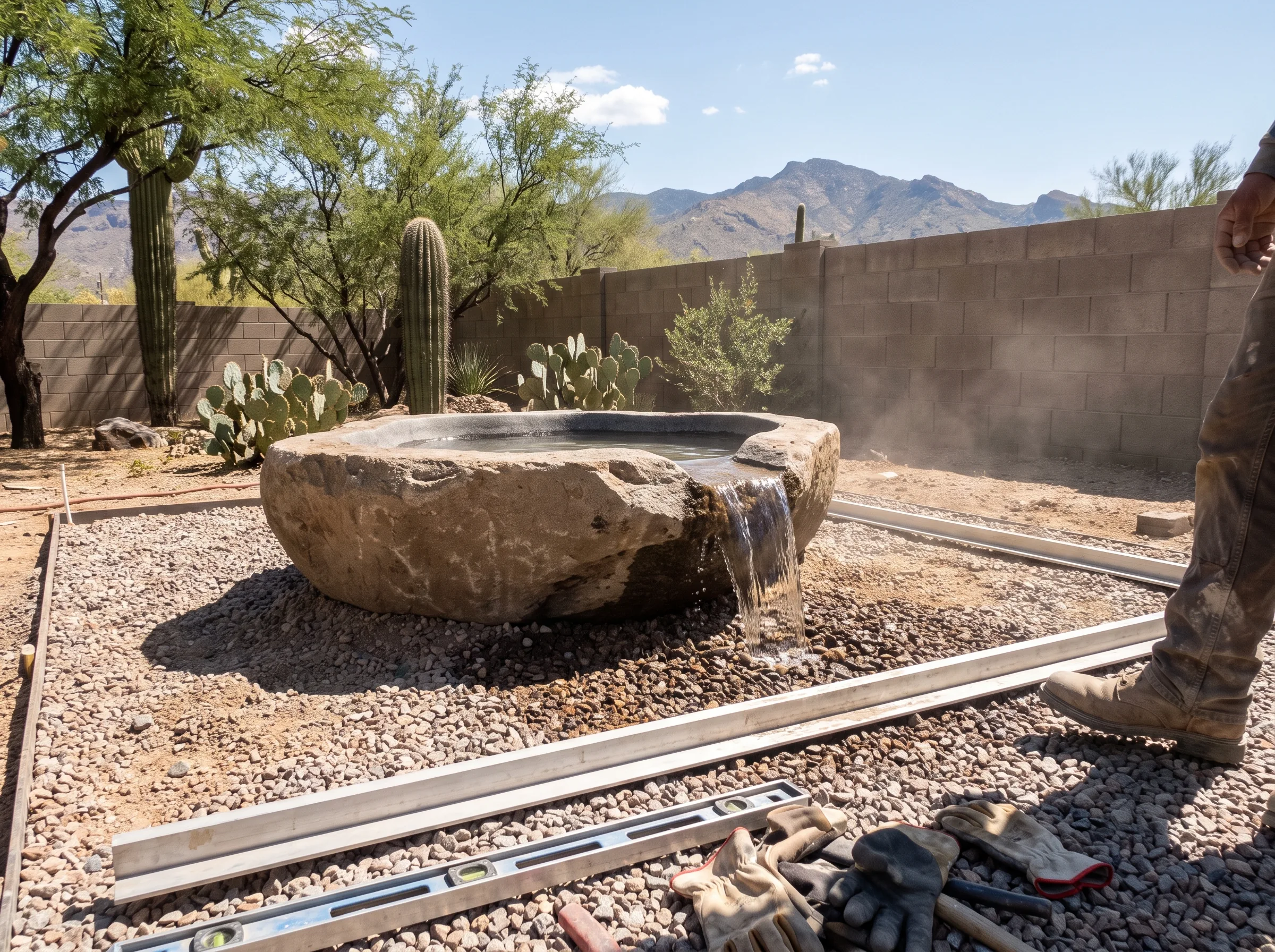
Fountains and basins sized for a desert yard, where evaporation is a real design input.
See all services
[ 03 ]This ground, this climate
The cemented layer under a lot of Tucson soil does not dig like dirt and it does not drain like dirt. Sometimes it is a stable bearing surface and sometimes it is a bathtub that holds water against your base. It varies across a single lot. We find out where it is before we quote a depth, not after.
Dark surfaces here run far hotter than light ones in July, and the difference between comfortable and unusable is a material choice made months earlier. We tell you what a surface will actually feel like barefoot in the afternoon before you choose it.
Three inches of rain in an hour does not soak in. It runs, and it runs to the lowest point it can find, which is often a slab poured with fall toward the house. Every surface we build has a designed direction of fall and a plan for where the water ends up.
Pavers, block, concrete, turf and shade under one contract. Nobody blames the other trade for the joint that does not line up, because there is no other trade.
[ 04 ]How it runs
We walk the yard, check grade and fall, look at where water currently goes, and probe for caliche. Roughly an hour, and no charge.
Dimensions, materials, patterns, colours and edges agreed in writing, with the base and drainage detail written into the scope rather than assumed.
An itemised number by area and by trade. If something is genuinely unknowable before we open the ground, it is named as an allowance rather than buried in the total.
Blue stake locates before we dig. Where a wall height, a structure or a gas run needs a permit, we handle the submittal.
Excavation, base, compaction, structure, surface, then finish. Site swept at the end of every day, because the neighbours have to live here too.
We walk it with you, run water on it if drainage was part of the scope, and hand over care instructions for the surfaces you now own.
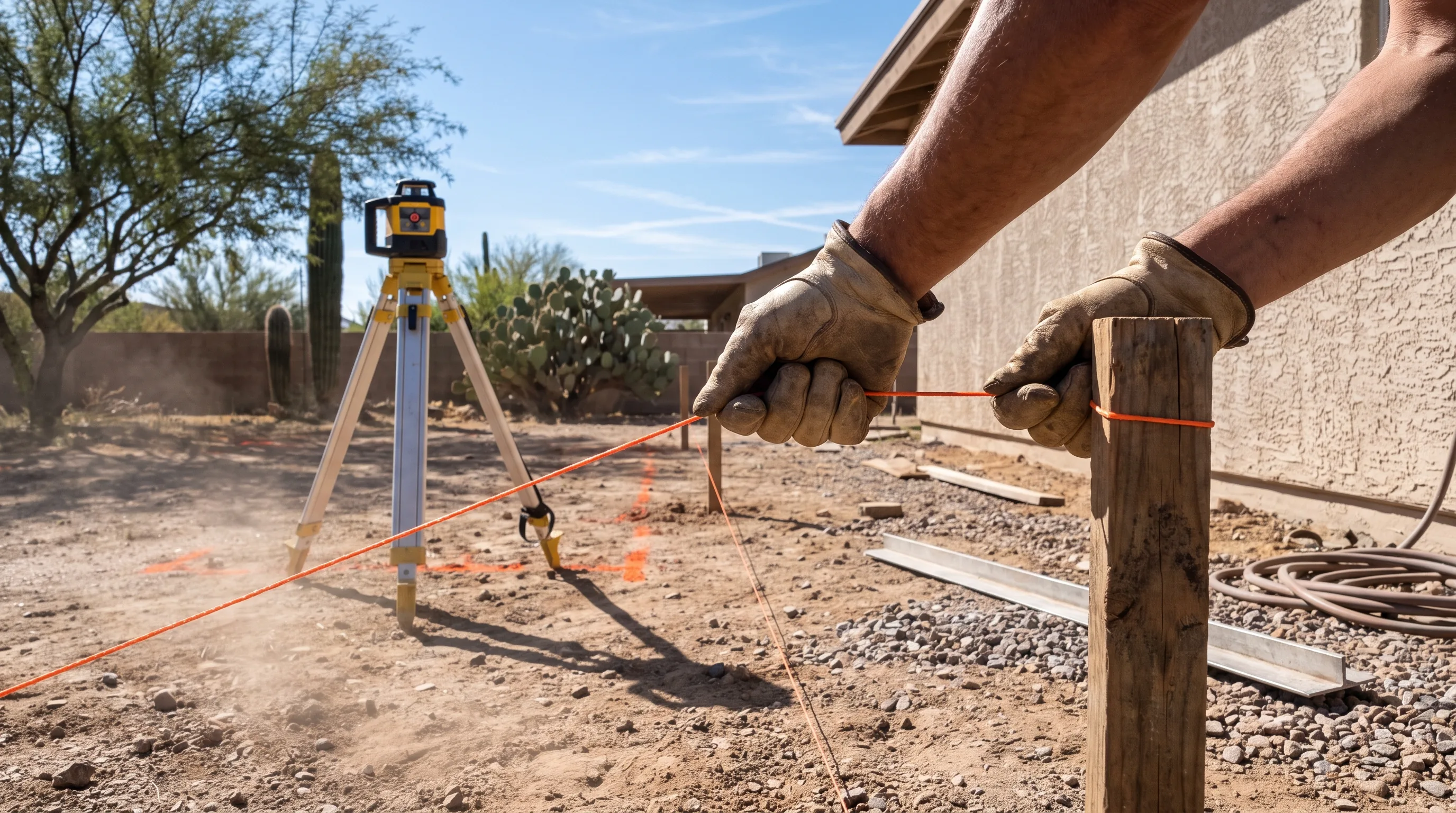
Tucson, Oro Valley, Marana, Vail, Sahuarita, Green Valley, Catalina Foothills, Casas Adobes, Rita Ranch, Dove Mountain, Corona de Tucson and Tanque Verde.
See where we build[ 05 ]Common questions
Ask what base depth they are quoting and why, ask where the water will go, and ask to see the scope in writing before you compare prices. Two quotes that look similar on the surface can differ by several inches of base and an entire drainage plan. The cheaper one is usually cheaper for a reason you find out in year three.
Per square foot, usually yes. Over ten years it often is not, because a paver surface does not need water, mowing, replanting or a monthly service visit. In a climate where plant material struggles and water costs money, the running cost is a bigger part of the comparison here than it would be elsewhere.
Stabilised decomposed granite is the cheapest usable surface in Tucson, followed by broom finished concrete. Pavers cost more up front and can be lifted and relaid, which is worth something on ground that moves. We will tell you which of the three actually suits the area you are describing.
It is permanent, it costs more than gravel, and a badly built surface is expensive to correct. It also reduces the area that absorbs rainwater, which matters here in monsoon season, so the drainage design has to keep up with the amount of hard surface you add.
A well built patio, driveway or wall is generally treated as an improvement rather than a repair. What actually moves the number is condition and usability, not square footage. A cracked slab and a settled patio read as deferred maintenance to a buyer, and a shaded outdoor space that works in June reads as extra living area.
Hardscape work is quoted by the job and by the square foot rather than hourly, because the labour is dominated by excavation and base preparation that varies with the ground. An hourly figure tells you almost nothing about what a finished patio will cost.
[ 06 ]Free on site quote
Tell us what you want to build and roughly how big the area is. We will come out, look at the ground, and give you a real number.
We will call you back, usually the same working day, and ask a few questions about the space before we come out. If it is urgent, call(520) 555-0168.