Every square foot of hard surface you add to a yard is a square foot that no longer absorbs rain. That water does not disappear. It runs, and it runs downhill to the lowest point it can find, and if nobody decided where that should be, it decides for itself.
In a climate that delivers much of its rain in a small number of intense storms, that is not an academic problem. A yard that copes perfectly with gentle rain can send water at a back door during a monsoon cell. Drainage is the part of a hardscape project that has to be designed before anything is built, because it cannot be added afterwards without lifting what you built.
The arithmetic nobody does
Before the build, rain lands on granite, dirt and planting, some of it soaks in, and the rest moves slowly.
After the build, a large proportion of that same rain lands on surfaces it cannot enter and moves immediately. It arrives at the low point faster, in greater volume, and all at once. A patio, a driveway and a shade structure roof together can convert most of a rear yard into runoff.
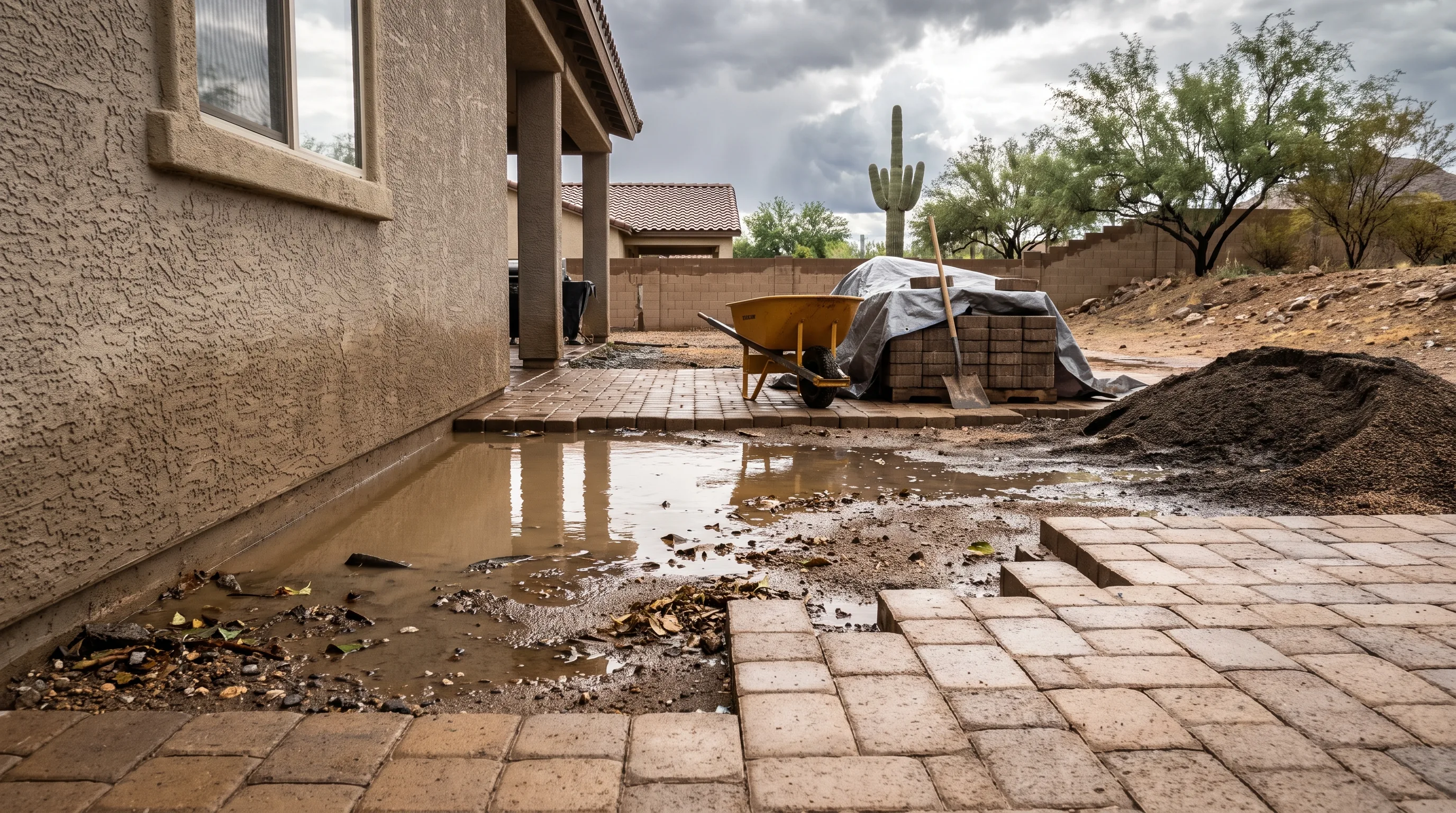
Two consequences follow. The low point of your property now receives considerably more water than it used to, so if that low point is against the house, against a wall footing or on the neighbour's side of the fence, you have created a problem. And the water is moving faster, which means it now has the energy to move material, which is how base washes out from under an edge.
Where we find the problems
Toward the house
The most serious and the most common. A patio poured or laid with fall toward the structure, or a yard graded so runoff collects at the back wall. Every surface should fall away from the house, and this is a decision made on paper before it is a problem on site.
Into an unrestrained edge
Water running across the boundary of a paver field takes fines with it, and the base loses material a little at a time, every storm. This is the mechanism behind most settled patios in this city.
Behind a retaining wall
A wall without drain rock, filter fabric, pipe and an outlet is a dam. Saturated backfill pushes far harder than dry backfill, and that is why leaning walls lean after wet periods rather than during dry ones.
Onto the neighbour
Redirecting concentrated runoff onto an adjoining property is a genuine problem, practically and legally, and it is a common unintended consequence of paving a yard. Where water leaves your property matters as much as where it leaves your patio.
The tools, roughly in order of preference
Surface fall
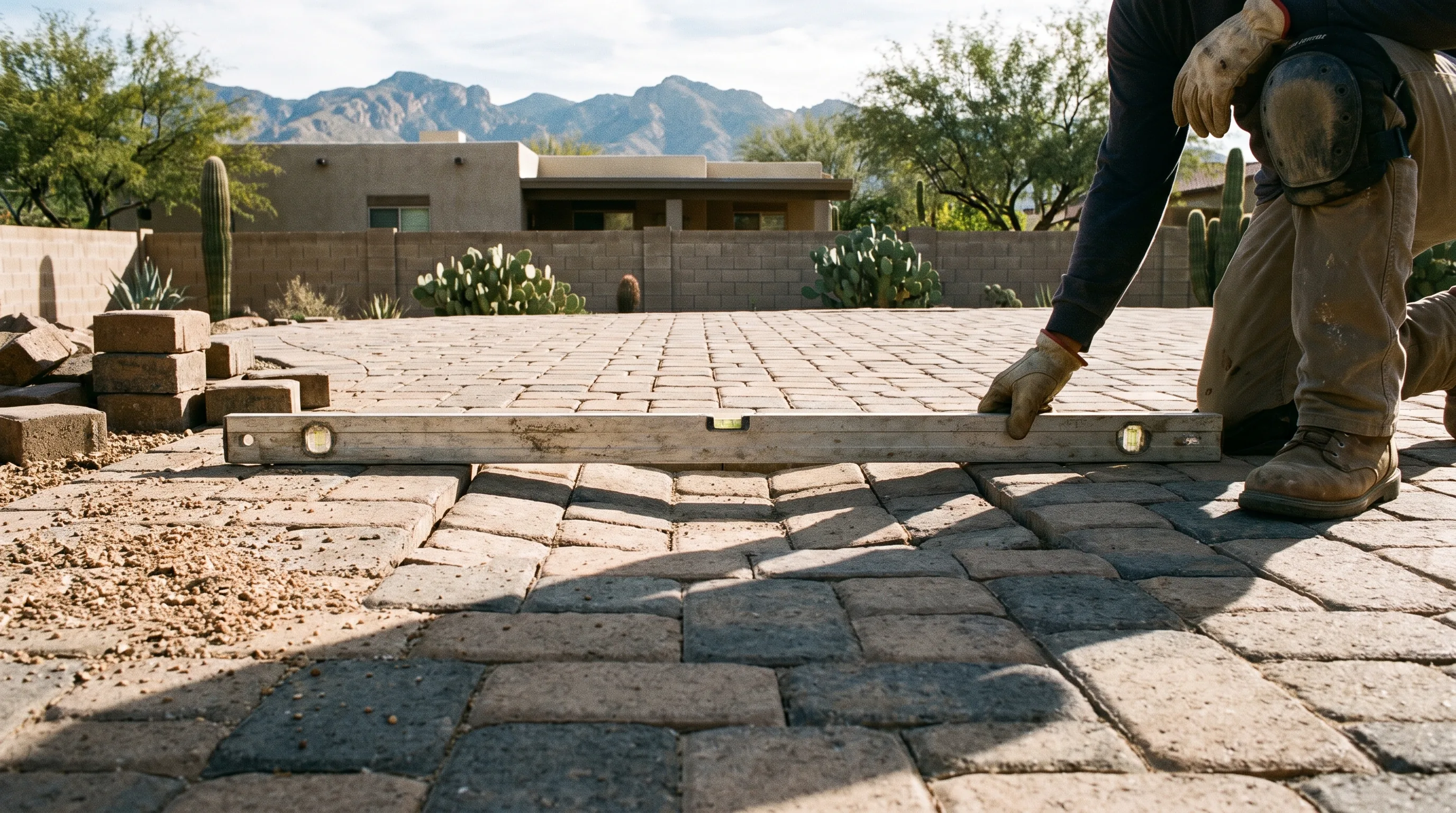
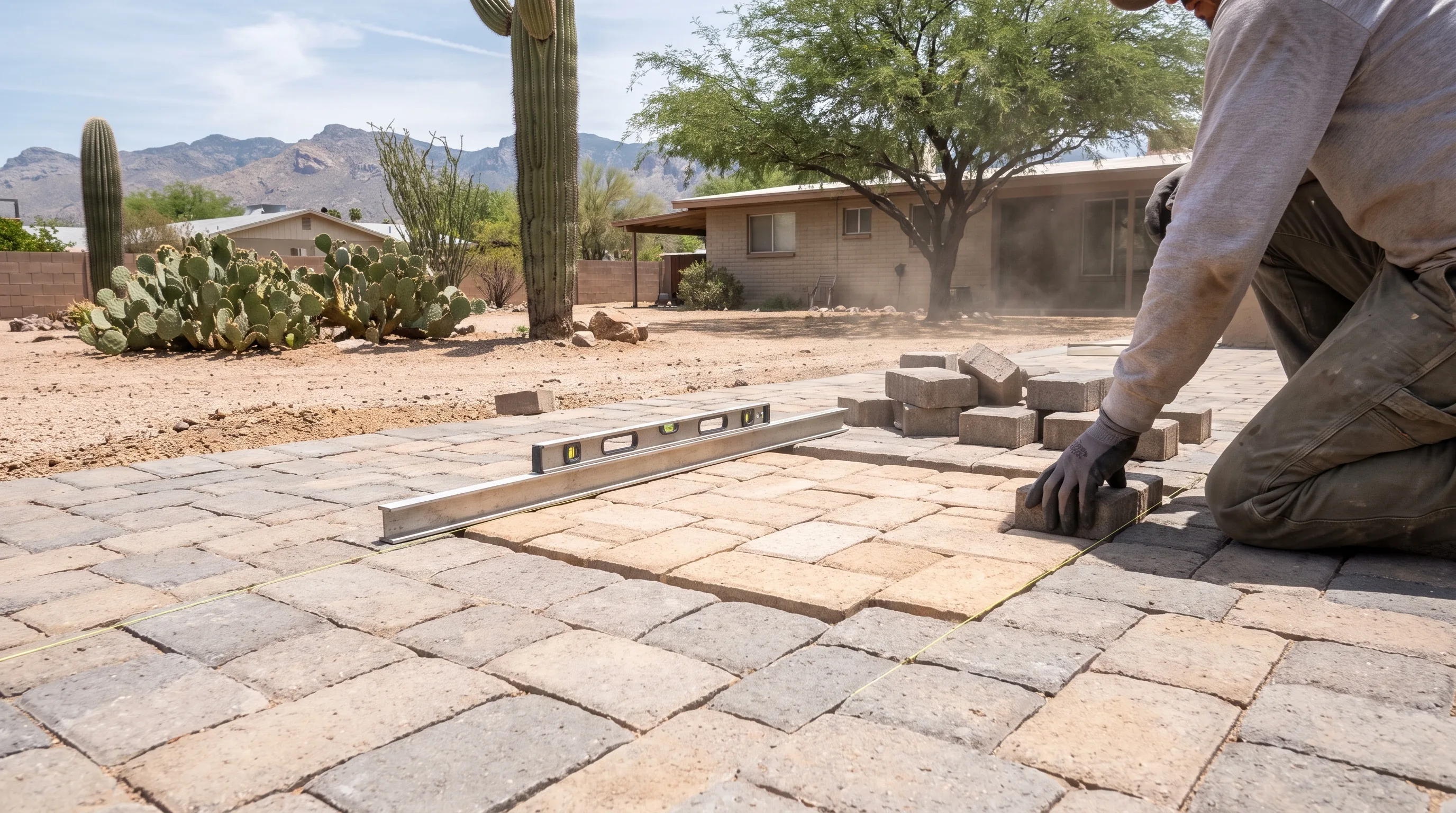
The cheapest and most reliable drainage is a surface built with a consistent fall in a chosen direction. It never blocks, it never silts up, and it requires no maintenance. Everything else is what you use when fall alone cannot do the job.
Swales and directed grading
Shaping the ground into a shallow route that carries water where you want it. Effective, invisible when done well, and better suited to larger yards with room to work with.
Channel drains and area drains
Used where a surface has to stay flat, or at a threshold, or where a low point cannot be avoided. They work, and they need occasional clearing, particularly here where storms carry a lot of debris and grit.
Subsurface drains
Perforated pipe in a gravel envelope, wrapped in filter fabric, taking water away below the surface. Genuinely useful behind retaining walls and in persistent problem areas, and worth doing properly because a silted up subsurface drain is a considerable amount of money doing nothing.
Dry wells and infiltration
Where there is nowhere to discharge to, water can be held and allowed to soak away. How well this works depends entirely on what is under your lot, and caliche can make it far less effective than the calculation suggests.
Why soak away solutions sometimes do not
A lot of infiltration based drainage advice assumes water will move downward through the soil at a reasonable rate. Where a cemented caliche layer sits under the lot, it may not. Water can reach that layer and stop, effectively filling the excavation from the bottom up, then sit against whatever is above it.
That is why we are cautious about dry wells and gravel filled pits as a default answer here, and why the more reliable solutions in Tucson are usually about moving water somewhere rather than persuading it to disappear.
Before the build, not after the storm
The right time to sort drainage is during the design of the hardscape, because at that point it is mostly free. Fall is a decision, not a cost. Retrofitting drainage into a finished patio means lifting the patio.
If you already have a problem, the useful thing to do is watch what happens during the next real storm and take a photo. Where the water arrives from and where it collects tells us more in one picture than an hour of standing in a dry yard.