The pavers themselves usually outlast everything else in the assembly and are commonly still serviceable decades later. That is not the useful answer, because a paver patio is four different things with four different lifespans, and the paver is the one that lasts longest.
The joint sand, any sealer, the edge restraint and the base all wear out on shorter cycles, and every problem people describe as pavers wearing out is actually one of those four. The good news is that all four are serviceable without replacing the surface.
What actually wears out, in order
Joint sand: the shortest cycle
Joint sand settles and needs topping up in the first season or two after installation, which is normal and expected. After that, it is lost gradually to wind, to monsoon runoff and to pressure washing. On an exposed site it goes faster. Losing joint sand is not cosmetic: it is what transfers load between pavers, so open joints let the field start moving.
Sealer: a repeating commitment
If a surface is sealed, it has to be resealed periodically or it wears unevenly and looks worse than an unsealed surface would. Tucson UV exposure is severe and it is hard on coatings.
Edge restraint: fails quietly
Restraint holds the outside edge and stops the field spreading. When it fails, nothing dramatic happens. The edge just starts creeping outward, joints near the border open, and the crisp line blurs into the gravel. Most people notice it years after it started.
The base: decades if it was built right, or the whole problem if it was not
A properly built and properly drained base is the longest lived component after the pavers themselves. A thin or poorly compacted base is the thing that will end the patio, and it fails progressively rather than suddenly, which is why settlement creeps up on people.
Four Tucson factors
UV and colour
Colour softens over years of full sun. On through body concrete pavers the change is gradual and reasonably even, so it usually reads as the surface maturing rather than fading. Anything where colour sits on the surface fares worse.
Heat cycling
Large daily temperature swings mean constant small expansion and contraction. A flexible paver surface handles that well, which is one of its genuine advantages over a monolithic slab in this climate.
Monsoon runoff
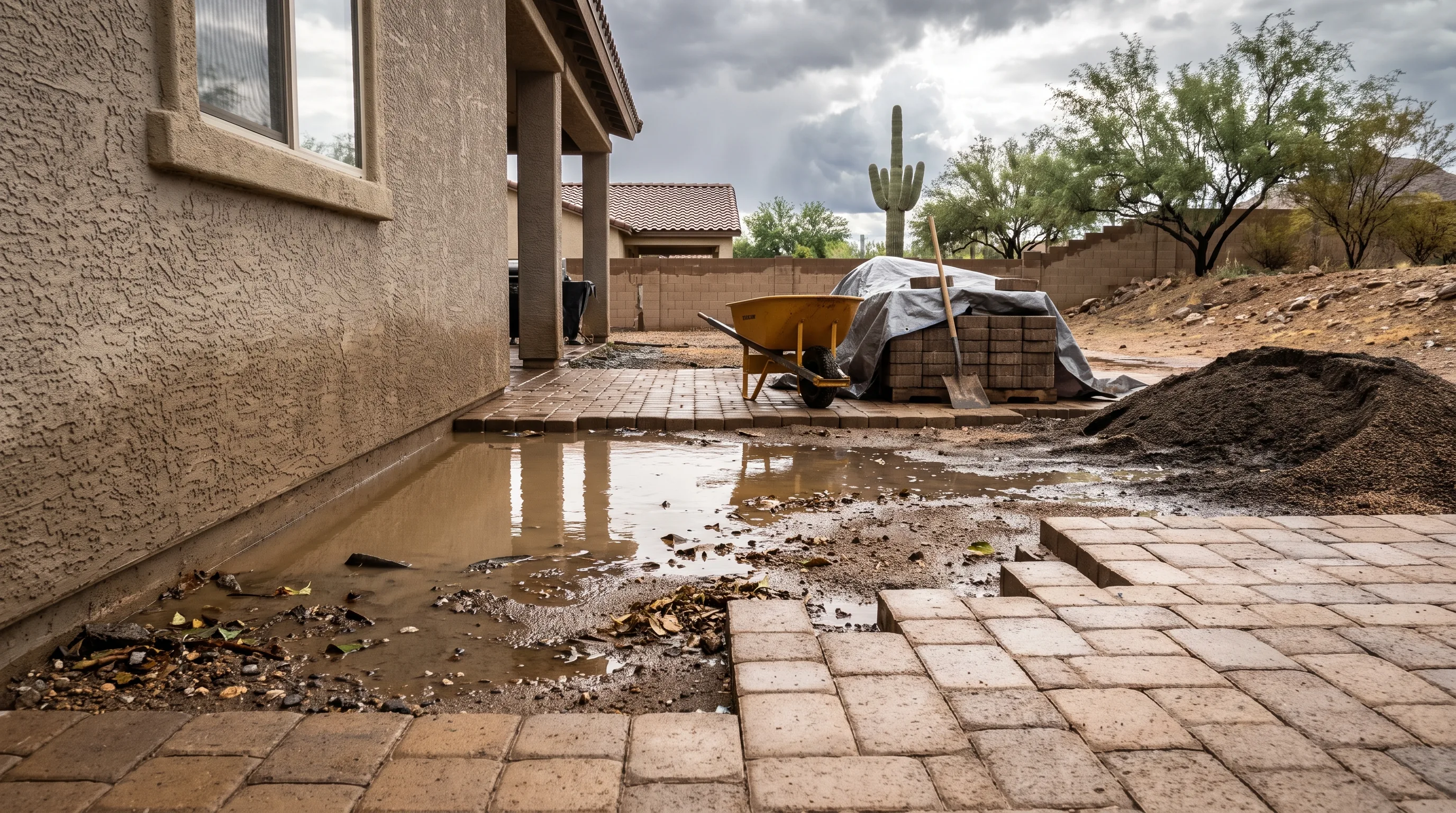
The main enemy of the base. Water moving under and around an unrestrained edge takes fines with it, and it does that a few times a year rather than continuously, which is why the damage appears in steps rather than gradually.
Hard water
Irrigation overspray and pool splash out leave mineral deposits. It is a cleaning problem rather than a durability problem, but it is persistent and worth designing irrigation to avoid.
What actually extends the life
Top up the joint sand. It is the cheapest maintenance available and it protects everything underneath.
Keep water off it and away from under it. Check that downspouts are not discharging onto the patio and that irrigation is not soaking the edge. Most settled areas we get called to have a water source within a few feet.
Do not pressure wash it aggressively. A narrow high pressure tip held close blasts the joint sand out and can etch the paver face. Wide fan, moderate pressure, keep moving.
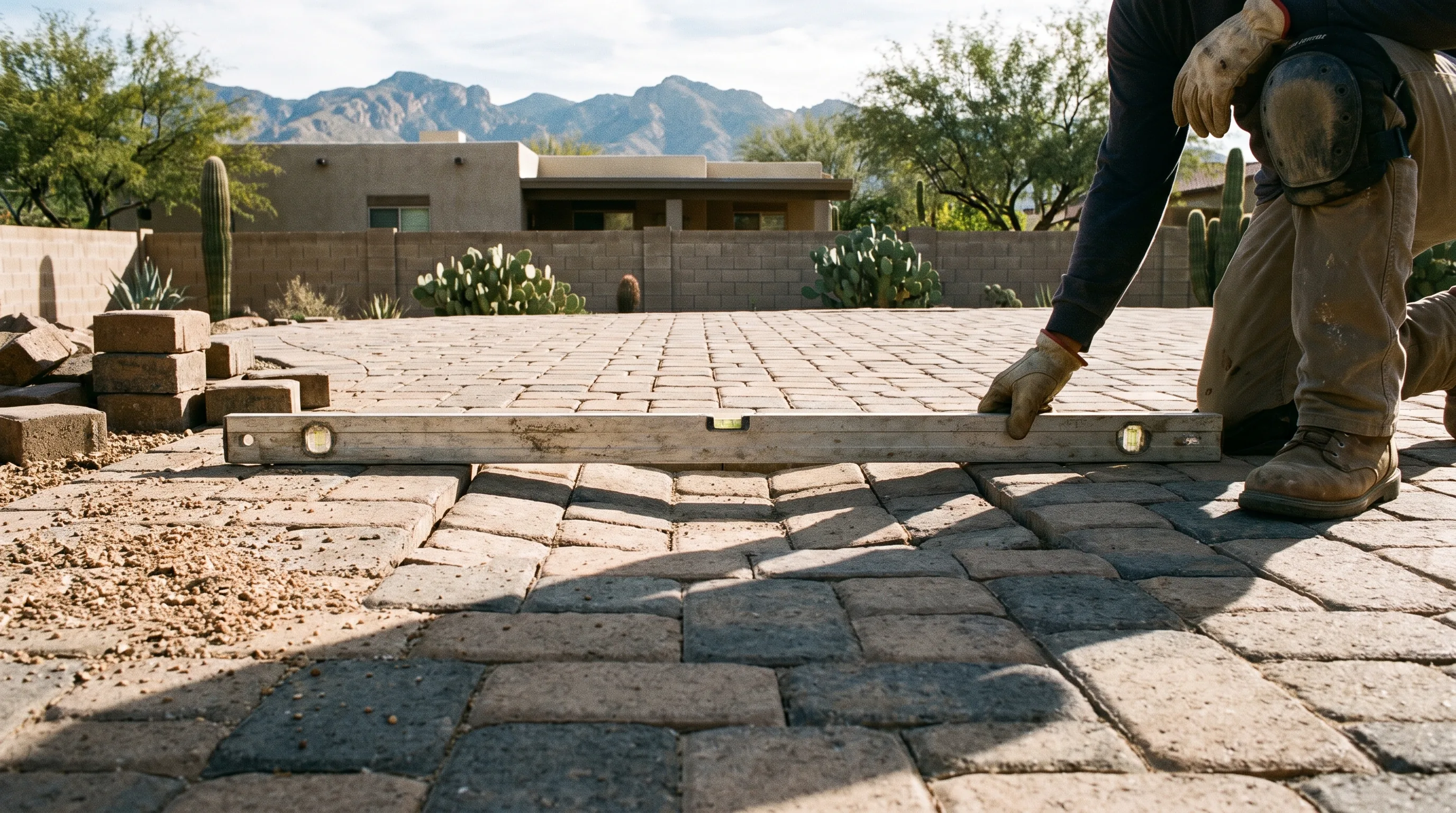
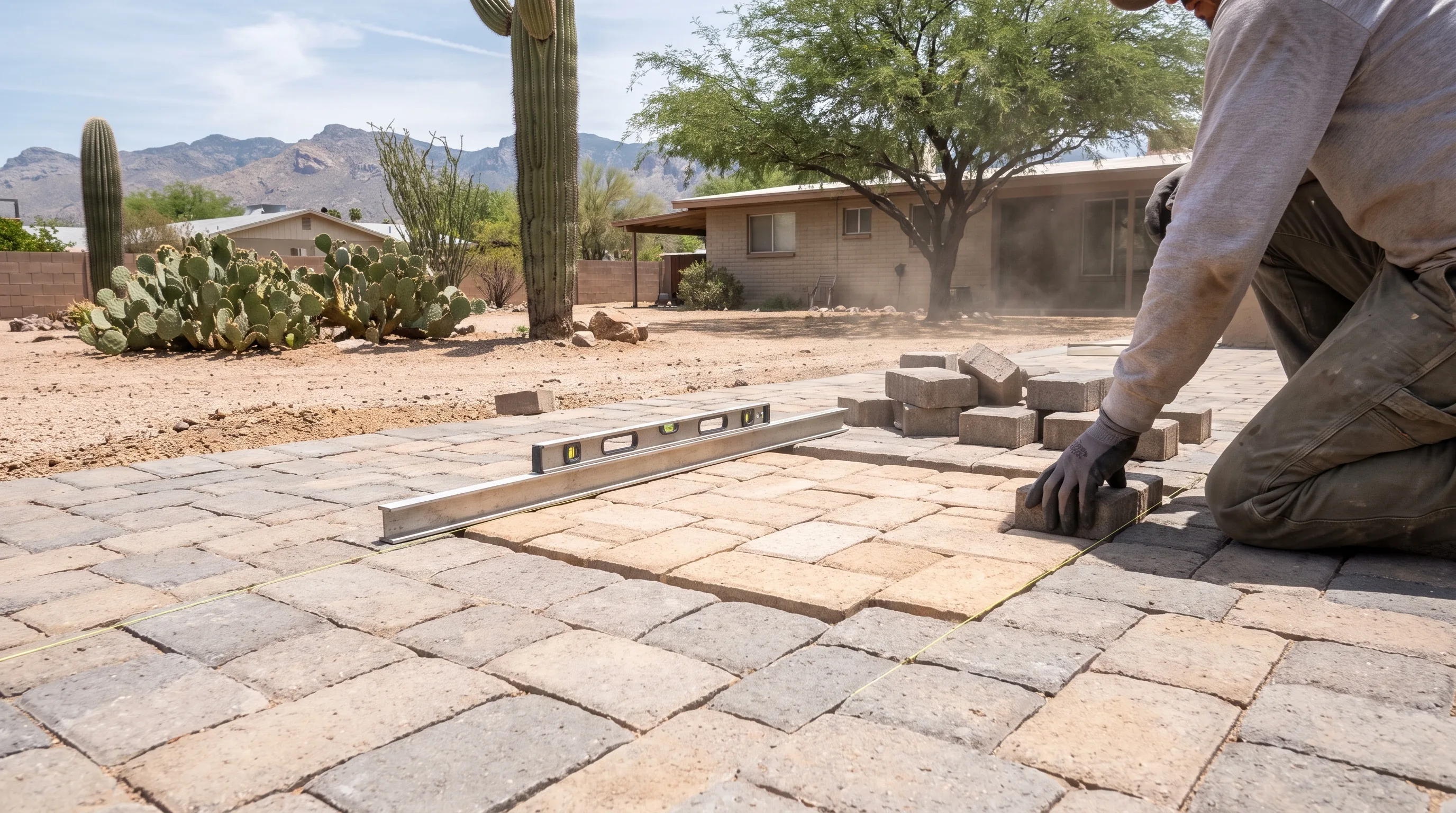
Fix small settlement early. Lifting and relaying a small area is straightforward. Waiting until the whole field has moved is not.
Signs it needs attention now
Joints that are visibly open across a large area. A dip that holds water after rain. An edge that has moved. Pavers that rock underfoot when you step on them.
All four are fixable and all four get more expensive the longer they are left, because the base underneath continues to lose material in the meantime.