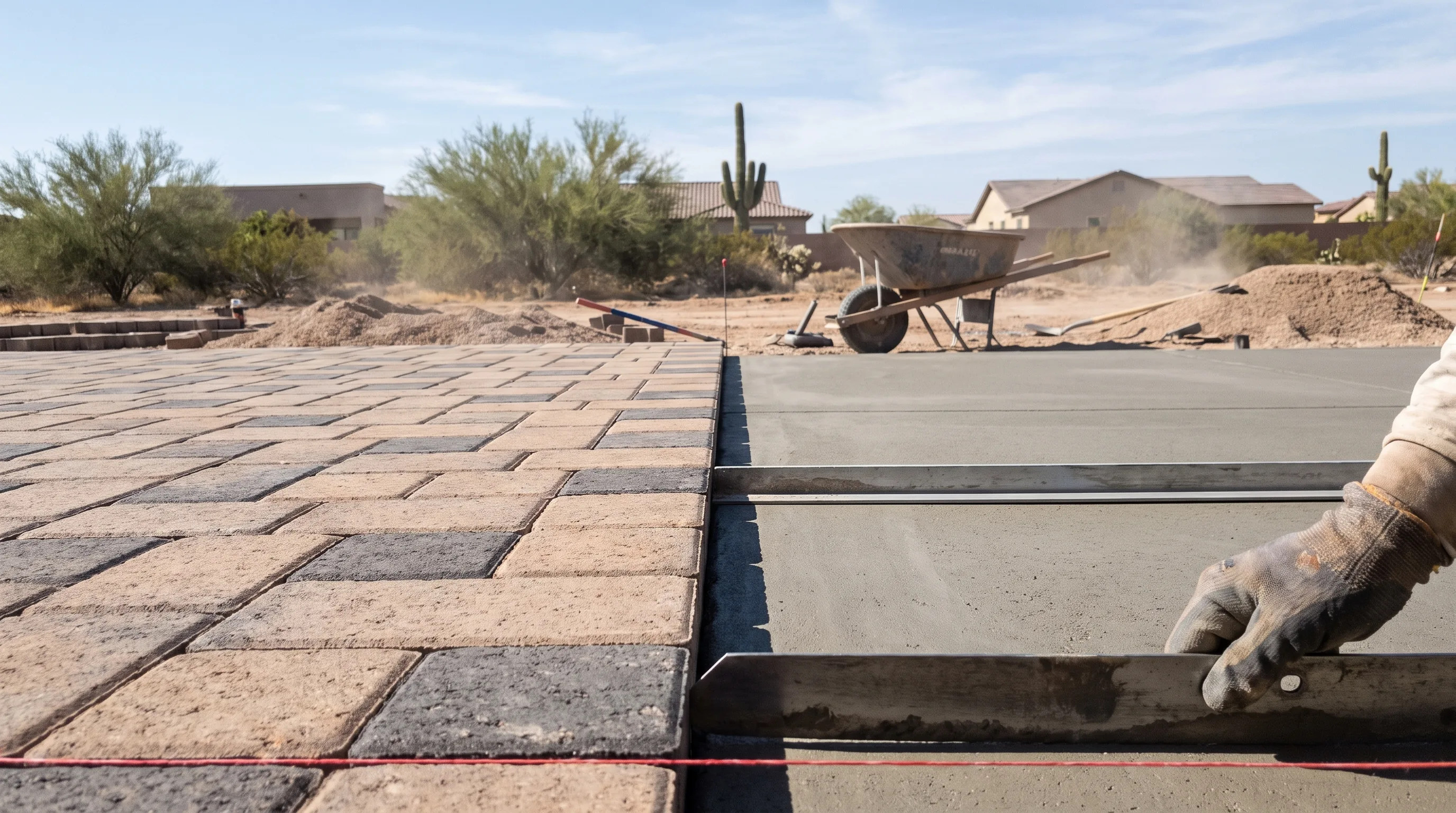
Concrete costs less up front and cracks permanently. Pavers cost more up front and can be lifted and relaid when they move. That is the whole comparison in two sentences, and everything below is detail.
The reason the question is worth more than two sentences here is that Tucson conditions push on both materials in specific ways: ground that moves, a sun that fades colour, surface temperatures that decide whether anyone will walk on it barefoot, and rain that arrives all at once. Those four things change the answer more than any general comparison will.
Up front cost, and cost over time
Plain broom finished concrete is the cheapest permanent surface of the two. Stamped and coloured concrete narrows the gap considerably. Pavers sit above both, mostly in labour rather than material, because laying, cutting and edging take time that pouring does not.
Over a longer horizon the comparison shifts, and it shifts on repairability rather than durability. Both surfaces last a long time when they are built properly. The difference is what happens when something goes wrong. A cracked slab is patched visibly or replaced entirely. A settled paver area is lifted, the base is corrected, and the same pavers go back down and look the same as they did before.
Whether that matters depends on how long you intend to be there and how stable your ground is. On a well drained lot with a modest patio, concrete may genuinely be the better value.
Which one is cooler underfoot
Colour matters more than material. A light tan paver and a light coloured concrete slab behave broadly similarly in the sun. A charcoal paver and a dark stained slab both get uncomfortably hot.
Two things do favour pavers slightly. They are more commonly available in genuinely light colours as a standard product, and the joints break up the surface, which helps a little. But neither material is comfortable in full Tucson afternoon sun in July, and anyone who tells you their product stays cool in direct summer sun here is overselling.
The real answer to surface temperature is shade. A ramada over a dark surface beats a light surface in full sun by a wide margin. If the area you are building is unshaded and you intend to use it in summer, spend the money on shade before you spend it on the surface.
How each one fails
Concrete cracks. All of it does, eventually. Good work controls where by cutting control joints, and good reinforcement keeps the crack tight rather than letting it open and offset. On the expansive and variable soils found around parts of Tucson, an under reinforced slab can crack early and badly.
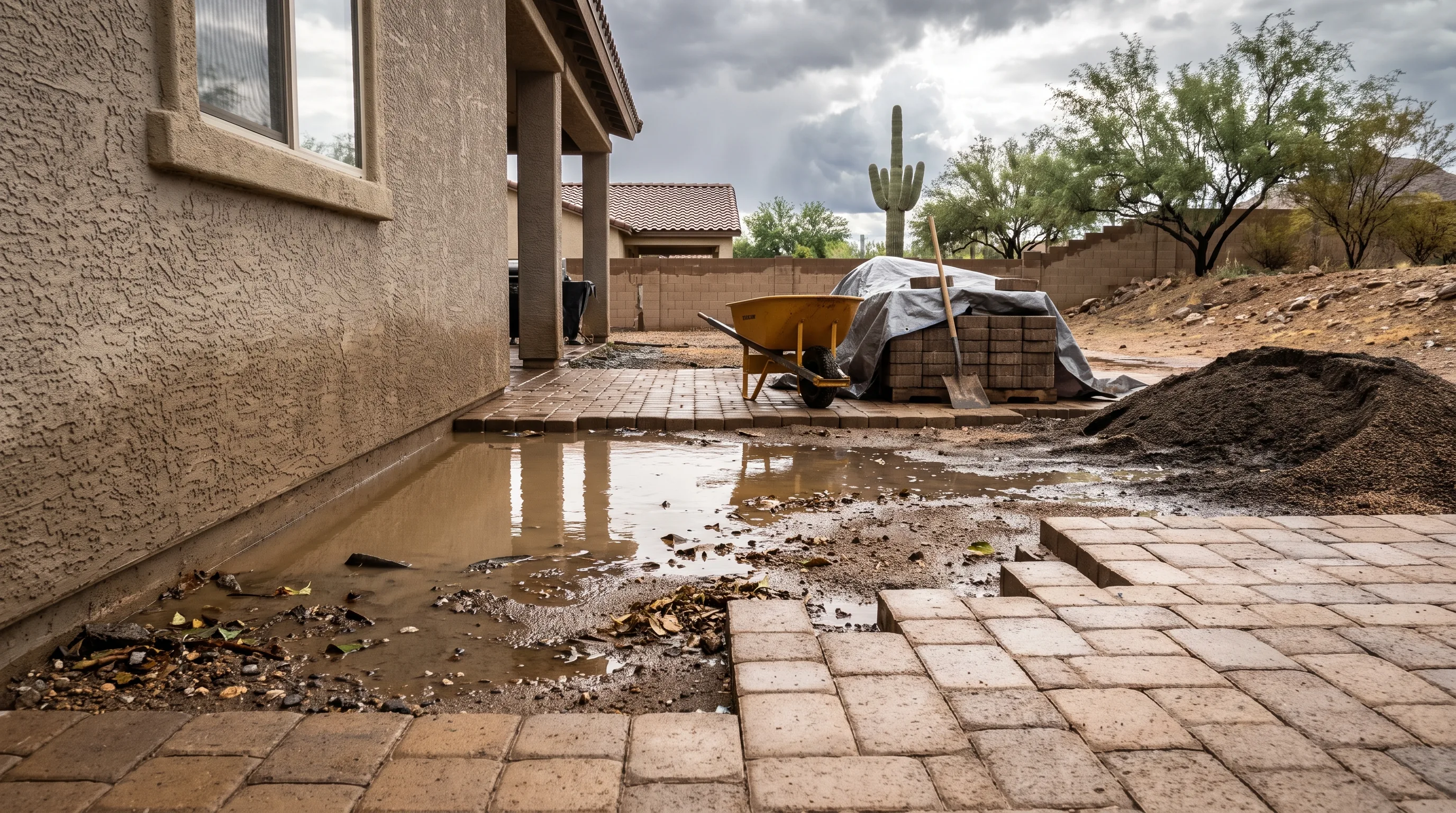
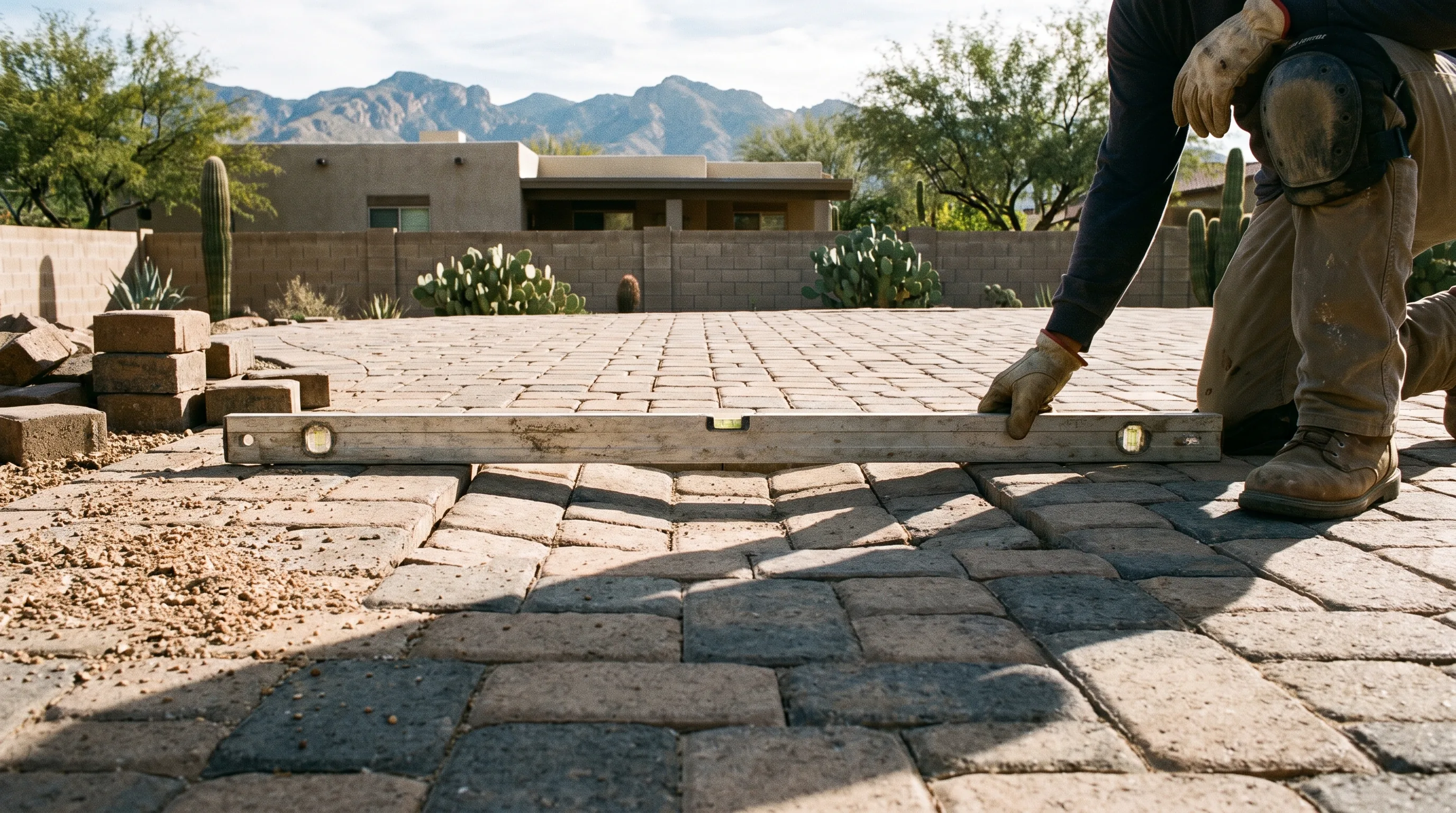
Pavers do not crack in the same sense, because the surface is made of many small units with joints between them that accommodate small movements. What pavers do instead is settle, and settlement is almost always a base or drainage failure rather than a material failure. It is also fixable.
The practical distinction is this. A concrete failure is permanent and visible. A paver failure is repairable and, once repaired, invisible.
How they age here
Concrete colour fades under this level of UV exposure, particularly surface applied colour on stamped work. Integral colour holds up much better. A plain grey slab is honest about what it is and ages quietly.
Paver colour also softens over years of full sun, though the change is usually more even and less noticeable because the colour goes through the unit rather than sitting on top of it. Where pavers show their age is in the joints, which need topping up in the first season or two and occasionally after that.
Hard water is a shared problem. Deposits from irrigation and from pool splash out will mark both surfaces here, and neither material is immune.
Which one would we actually build for you
Concrete is usually the right call when
The area is a simple shape under a covered patio, the ground is stable, the budget is the binding constraint, or the surface is genuinely utilitarian such as a shed pad or a side yard run. Concrete is also the more sensible choice where a very smooth continuous surface matters, for example for wheelchair access.
Pavers are usually the right call when
The ground is known to move, the area is a complicated shape, the surface has to tie into existing levels precisely, you want the ability to lift and access what is underneath, or the surface will be walked on barefoot regularly, as with a pool deck.
Stamped concrete sits between them
It gives you pattern and colour for a moderate premium over plain concrete, and it is a reasonable middle path on stable ground. It carries concrete's cracking behaviour, and a crack across a stone pattern is more visible than a crack across a plain slab.
How to decide for your yard
The deciding factor is usually the ground, and the only way to know what your ground is doing is to look at it. An existing cracked slab on your lot is free information: it has already told you something about the soil.
Get someone out who builds both. A contractor who only pours concrete will recommend concrete and a contractor who only lays pavers will recommend pavers, and neither of them is lying to you exactly.