A paver patio in Tucson is priced by the square foot, and the honest range is wide because most of the cost is in ground you never see.
Two quotes for the same patio can differ by thousands of dollars and both can be honest, because they are quoting different amounts of excavation, different base depths and different edge details. This guide explains what those differences are so you can tell which quote is cheap and which one is under built.
Five things move the number, and pavers are not one of them
1. Excavation and disposal
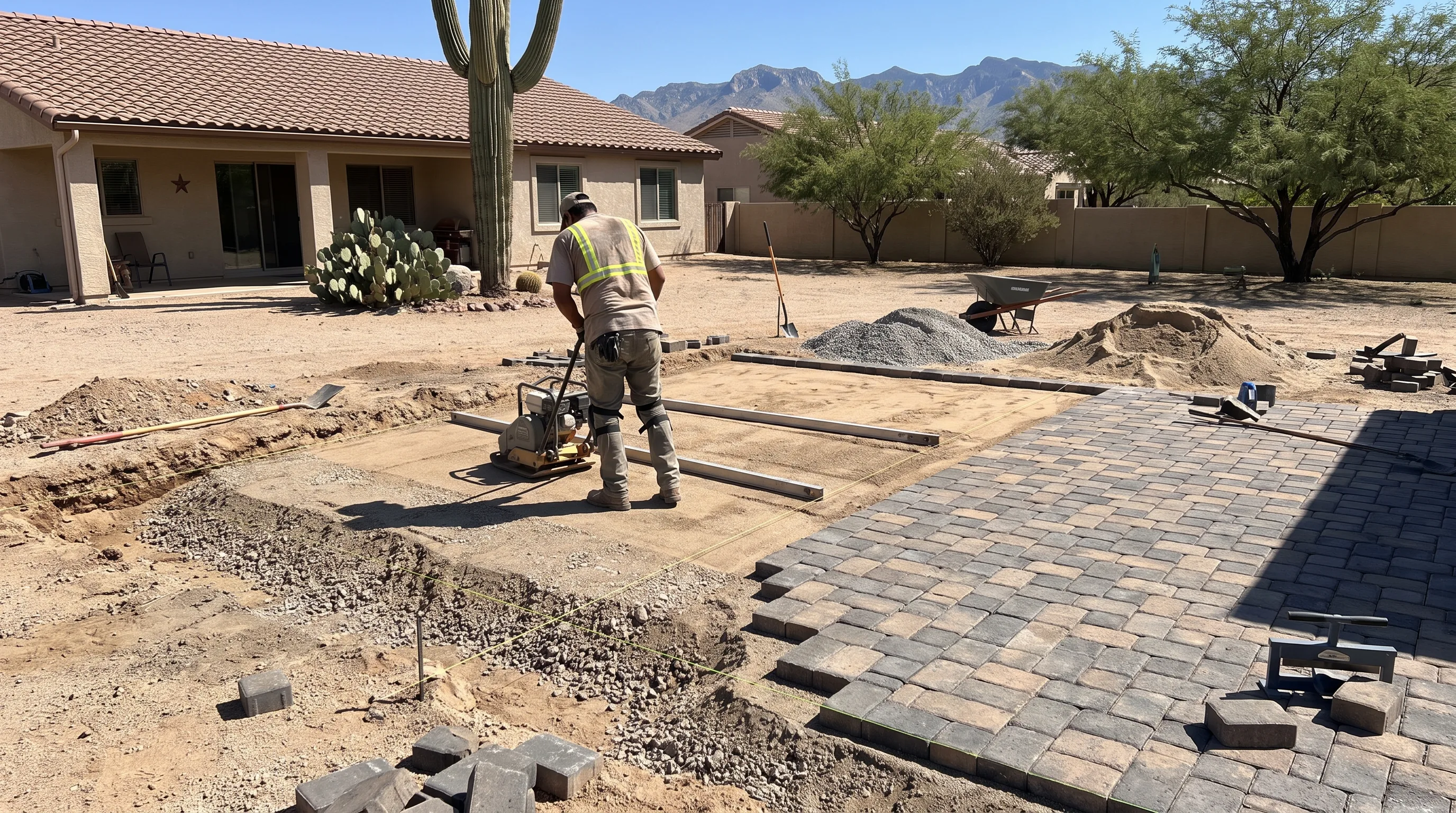
This is usually the single biggest line. A patio needs the loose surface material removed to a real depth, and all of that has to go somewhere. Where caliche is close to the surface, excavation stops being digging and starts being breaking, which is slower and more expensive. Where it is not, the job is straightforward. Nobody can tell you which you have from a photograph.
2. Base depth
The compacted aggregate base is the structure of the patio. More base costs more money in material, in labour and in disposal, because the deeper you go the more spoil you generate. This is the line item most often quietly reduced to win a job, and it is invisible once the pavers are on.
3. Access
How material reaches the back yard changes the price meaningfully. A yard a machine can drive into is one job. A midtown lot where every yard of base and every pallet of pavers has to come through a three foot side gate in a wheelbarrow is a different job at the same square footage.
4. Shape and cuts
A rectangle is cheap. Curves, angles, tie ins around an existing slab, and borders following a pool shape all mean saw cuts, and saw cuts are slow. A complicated outline can add a surprising amount to labour on an otherwise simple patio.
5. Material choice
The pavers themselves are usually a minority of the total, which is why comparing material prices per square foot tells you almost nothing about the installed cost. Premium products, larger format units and natural stone all cost more, but changing paver rarely changes the total as much as changing the base depth does.
What should be written on the quote
A quote you can actually compare should state, in writing:
- The excavation depth and what happens to the spoil
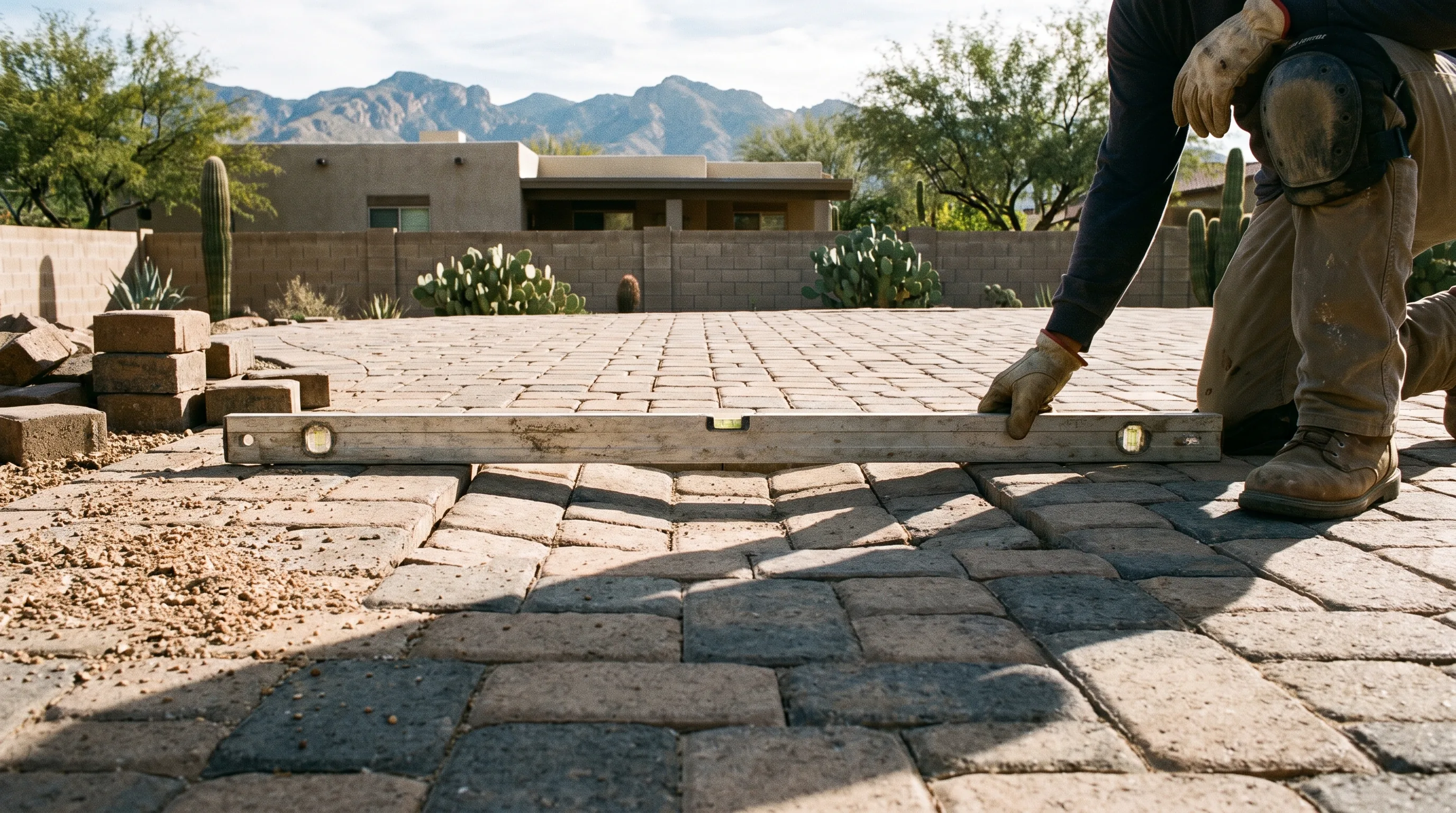
- The compacted base thickness, and that it is compacted in lifts
- The bedding layer and its thickness
- The paver, the pattern and the border detail
- Edge restraint on every open edge
- Joint sand type and final compaction
- Where the water will go, and the direction of fall
If a quote says a number and a paver name and nothing else, it is not a quote, it is a price. Ask for the list above from everyone you are considering. The contractor who is happy to write it down is telling you something.
Why the cheapest number is usually cheap for a reason
There is nothing wrong with a competitive price. There is something wrong with a price that is competitive because the base is half as thick, the edges are unrestrained and the excavation is shallow.
The reason this works as a sales strategy is that both patios look identical on the day they are finished. The difference appears in year two or three, as a dip near the door, an edge that has wandered into the gravel, and joints wide enough to grow weeds. By then the contractor is a phone number that does not answer.
A settled patio can be repaired, which is one of the real advantages of pavers over concrete. But repairing it costs more than building it correctly would have, because the pavers have to come up, the base has to be rebuilt and everything has to go back down.
Two things that make Tucson different
Caliche is the cemented layer that sits under a lot of lots here at unpredictable depths. Where it is solid it is an excellent bearing surface and a gift. Where it is a broken layer over softer soil it holds water underneath your base and lets the patio move. It also changes what excavation costs, because breaking it is not the same job as digging.
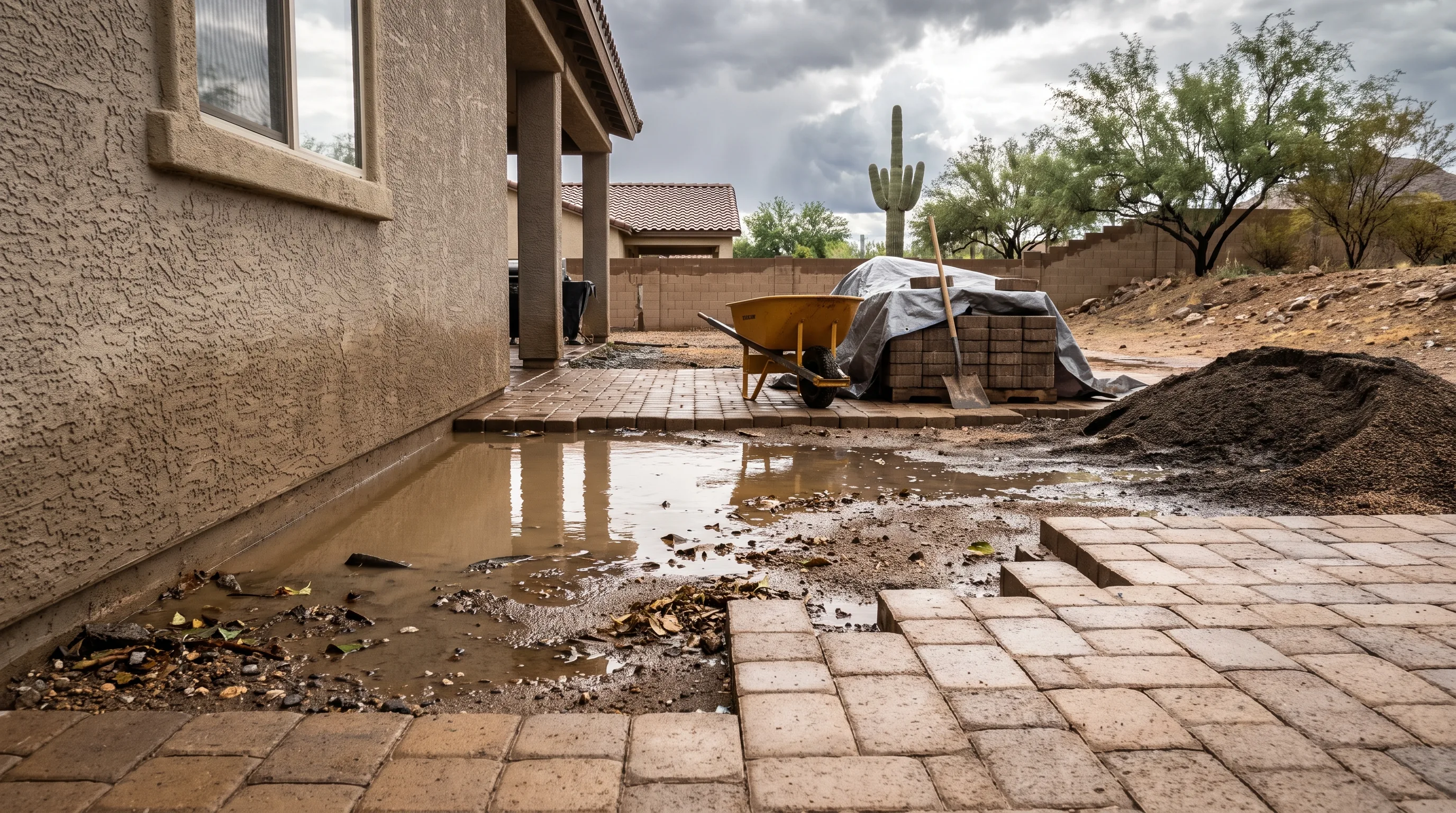
Monsoon is the other. Tucson gets much of its annual rain in a small number of intense events, so a patio here does not need to handle steady drizzle, it needs to handle two inches in an hour. That is a drainage design problem, not a surface problem, and a patio built with fall in the wrong direction will send that water at your house. Ask every contractor where the water goes. If they have not thought about it, keep looking.
When it is worth getting someone out
Get a site visit before you set a budget, not after. Any number you find online is a national or regional average that has never seen your yard, your access or your ground.
A proper site visit takes about an hour, should cost nothing, and should end with someone telling you what the excavation and base will need for your specific lot. If it ends with a price and no explanation, you learned nothing.