Hardscaping is priced by the element, not by the yard, so the useful answer is a set of bands rather than one number.
What follows is where the money actually goes, which is more useful than a number, because it lets you tell the difference between a quote that is cheap and a quote that is missing something.
Rough bands by project type
| Project | Typical size | The main variable |
|---|---|---|
| Paver patio | 300 to 500 sq ft | Excavation difficulty and access |
| Concrete patio | 300 to 500 sq ft | Demolition of what is there now |
| Paver driveway | 600 to 900 sq ft | Base depth for vehicle loading |
| Block privacy wall | 40 to 80 linear ft | Height, because footing and steel scale with it |
| Retaining wall | 20 to 40 linear ft | Height and whether engineering is required |
| Artificial turf | 400 to 800 sq ft | Turf product specification |
| Ramada or patio cover | 12 x 16 ft | Span, and whether the roof is solid |
| Fire pit | Seats six | Gas run length from the meter |
| Full yard build | Whole rear yard | How much has to come out first |
On a whole yard build, roughly where it lands
Demolition and excavation
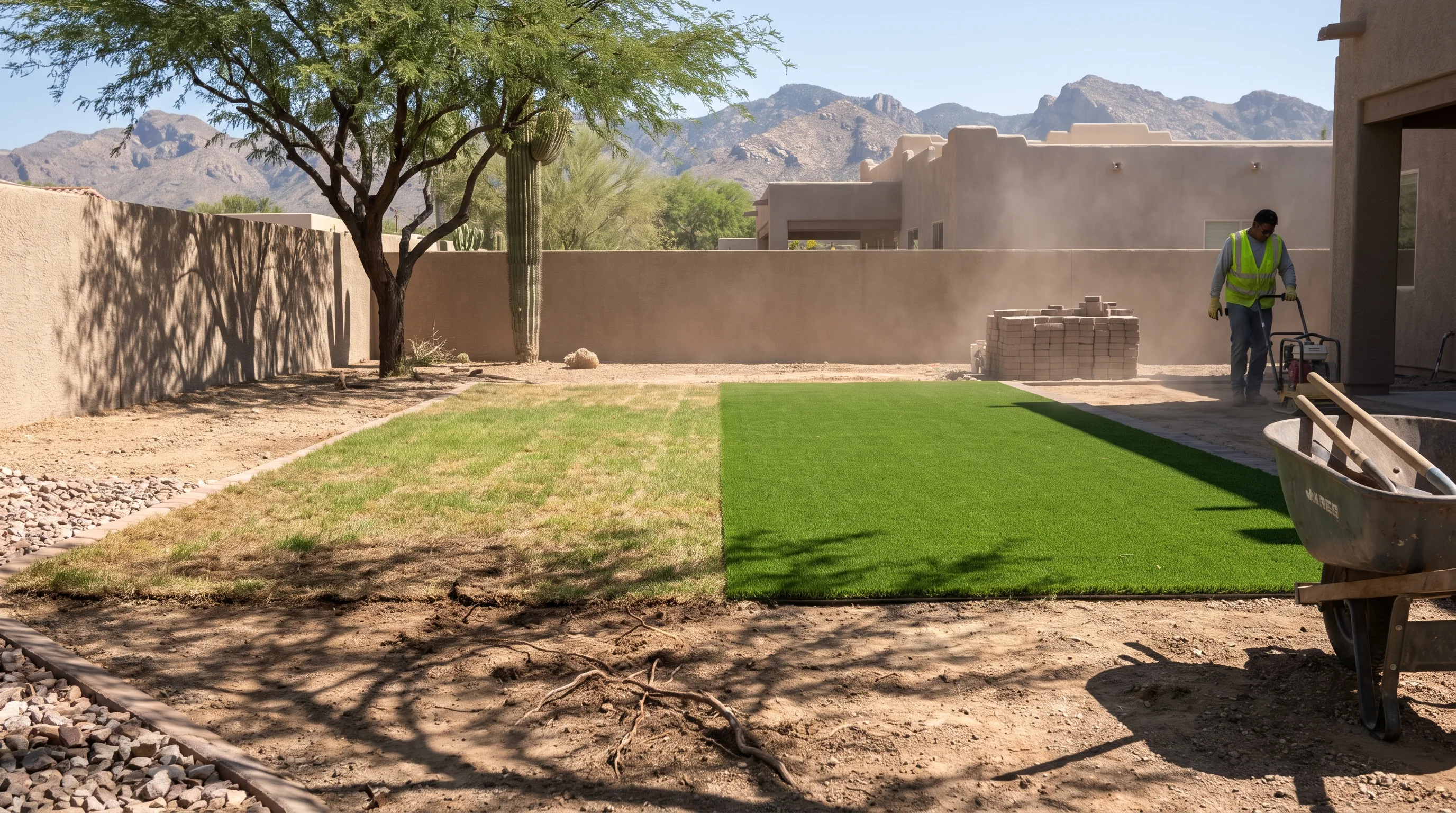
Usually the most underestimated line on the quote. Removing an old slab, taking out a lawn, or digging a yard that turns out to be sitting on caliche all cost real money before a single new thing is built. On a full yard build this can be a substantial share of the total.
Base and drainage
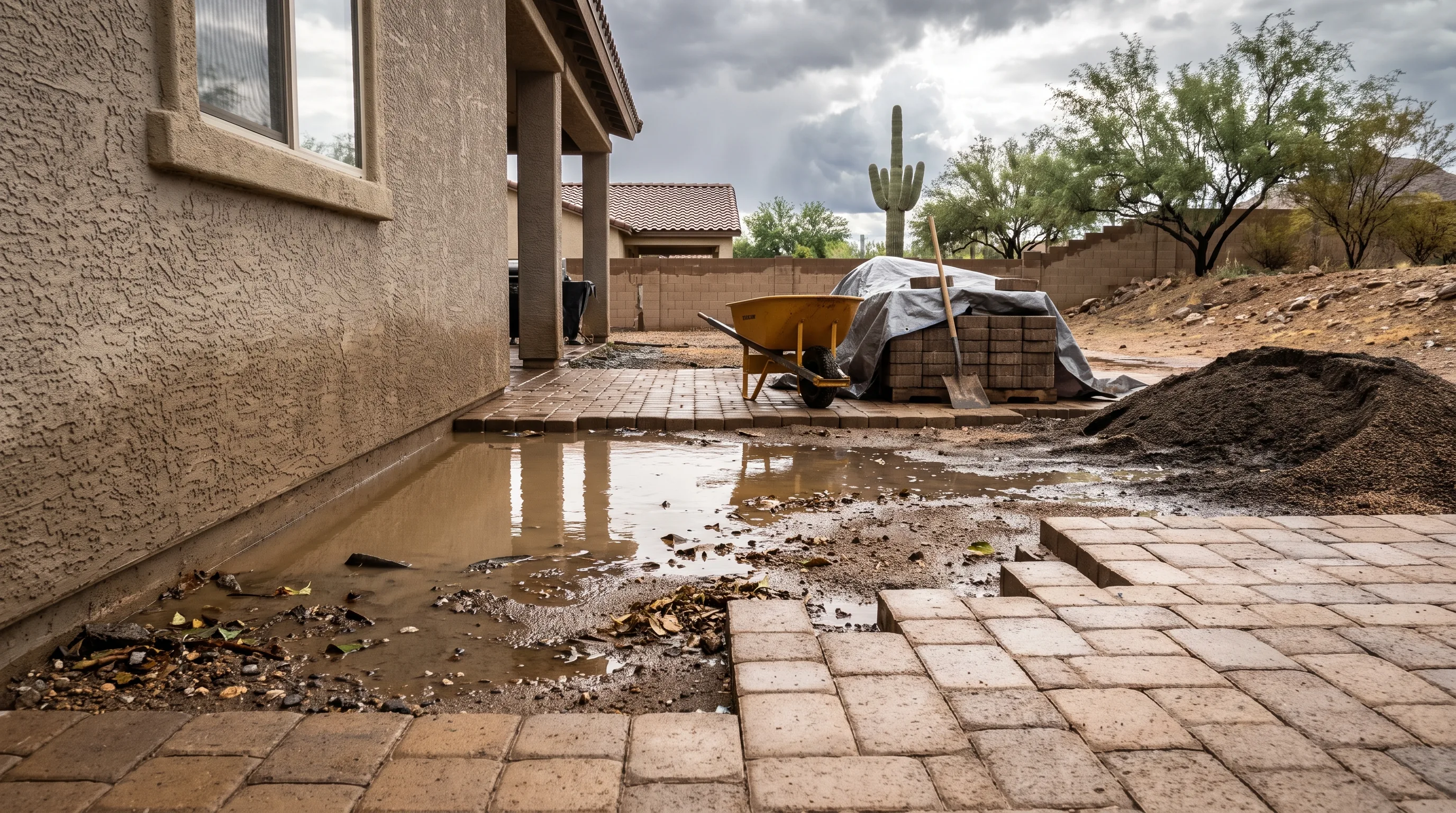
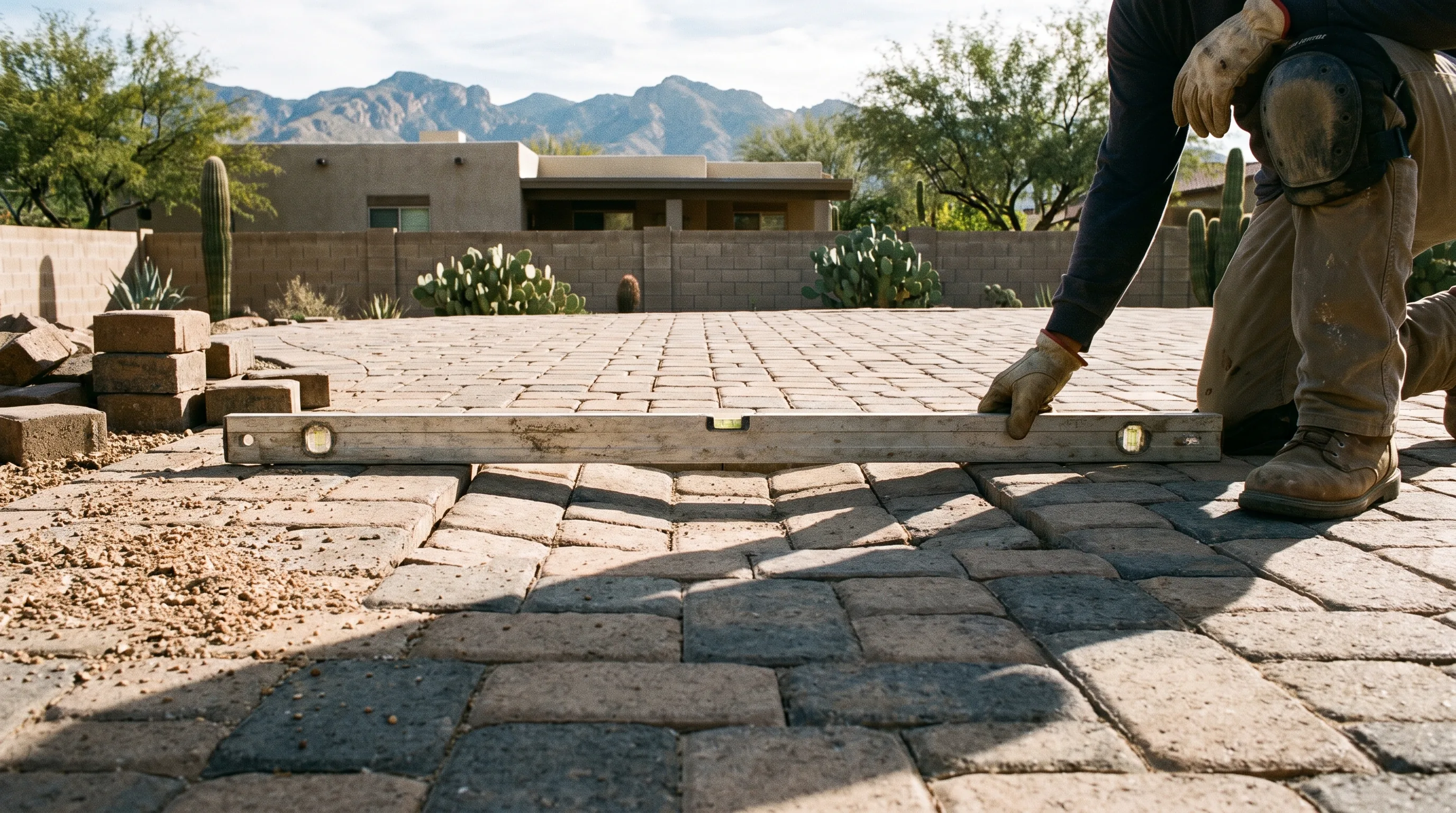
Base material, compaction and the drainage design are the structure of everything above them. This is where a cheaper quote is usually cheaper, and it is completely invisible in the finished yard.
Surfaces
Pavers, concrete, turf and DG. Material choice moves this line, but rarely as much as excavation and base do.
Structures
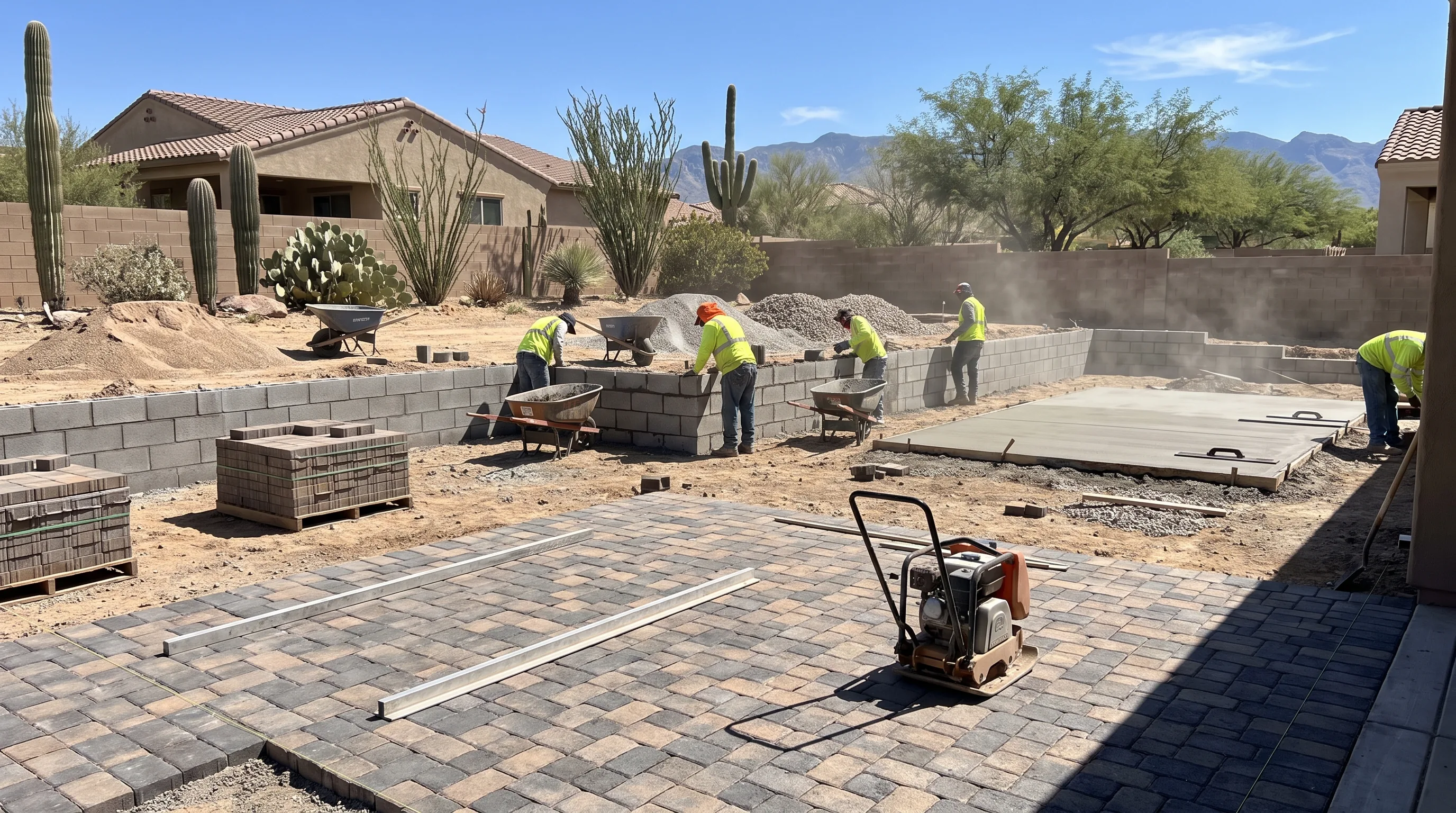
Walls, shade structures, fire features and outdoor kitchens. These are masonry and carpentry rather than surfacing, and they carry footings, permits and sometimes engineering with them.
Planting and irrigation
Usually the smallest line on a hardscape led project, and the one most often cut first when a budget gets tight. Worth protecting more than people do, because a yard that is all hard surface radiates a great deal of heat.
Compare the ground, not the total
If two quotes for the same yard are far apart, the difference is almost never the pavers. Ask both contractors for:
- Excavation depth, and where the spoil goes
- Compacted base thickness, and whether it is compacted in lifts
- Edge restraint on open edges
- The drainage design and where water leaves
- Footing depth on any wall or structure
- What is an allowance rather than a fixed price
You will usually find the gap inside three or four of those lines. Once you can see it, you can decide whether you want to buy the difference. Sometimes the honest answer is that the cheaper build is adequate for what you need.
Doing it in stages without paying twice
Full yard builds are expensive and there is no shame in phasing one. There is a right order, though, and doing it out of order costs money.
Grading and drainage go first, always. So does anything that runs under a surface, including irrigation, gas lines for a future fire feature or kitchen, and conduit for lighting. Putting a patio in and then deciding you want a gas fire pit on it means lifting the patio.
Structures with footings come next, because footings are excavation and excavation is disruptive. Surfaces after that. Planting last.
If the budget only covers one stage this year, spend it on the stage that everything else sits on.
When to get someone out
Before you set the budget. A site visit costs nothing and it is the only way to find out whether your lot is a straightforward dig or a caliche breaking exercise, which is the single biggest unknown in the price.
Come with a list of what you want and a rough idea of what you can spend. A good contractor will tell you which parts of that list are realistic and which are not, and will suggest an order to do them in.