Shade beats material, and colour beats material category. Those two sentences settle most of this question before you have chosen anything.
A pale surface in full afternoon sun will still be unpleasant in July. A dark surface under a solid roof will be fine. If comfort in summer is the goal, the order of spending is shade first, then light colour, then material. Everything below explains why, and where the differences between materials genuinely do matter.
It is not the air temperature
On a 105 degree afternoon, the air is the least of it. A surface in direct sun absorbs solar radiation all day and re radiates it, and by mid afternoon an unshaded hard surface is far hotter than the air above it. That is why the walk from the back door to the pool is the part people remember.
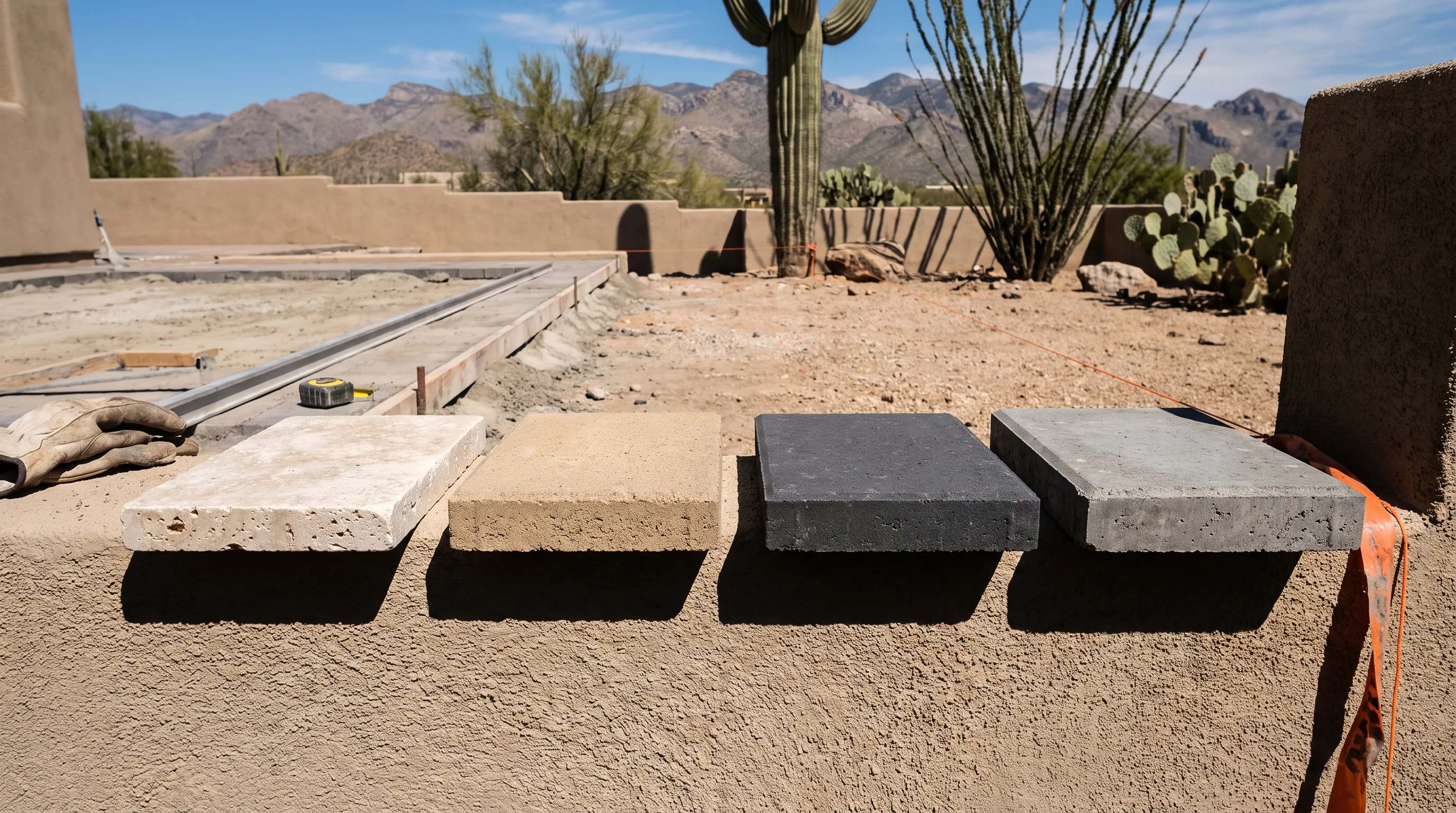
Three things decide how hot a given surface gets: how much sunlight it absorbs rather than reflects, which is mostly a function of colour, how much heat it can store, which is a function of mass and material, and how long it has been in the sun. The third one explains why a west facing patio is worst at five in the afternoon rather than at noon.
Roughly coolest to hottest, in full sun
1. Light travertine and pale natural stone
The best performers in full sun among common hard surfaces. Light in colour by nature, and travertine in particular has a reputation on Arizona pool decks for a reason.
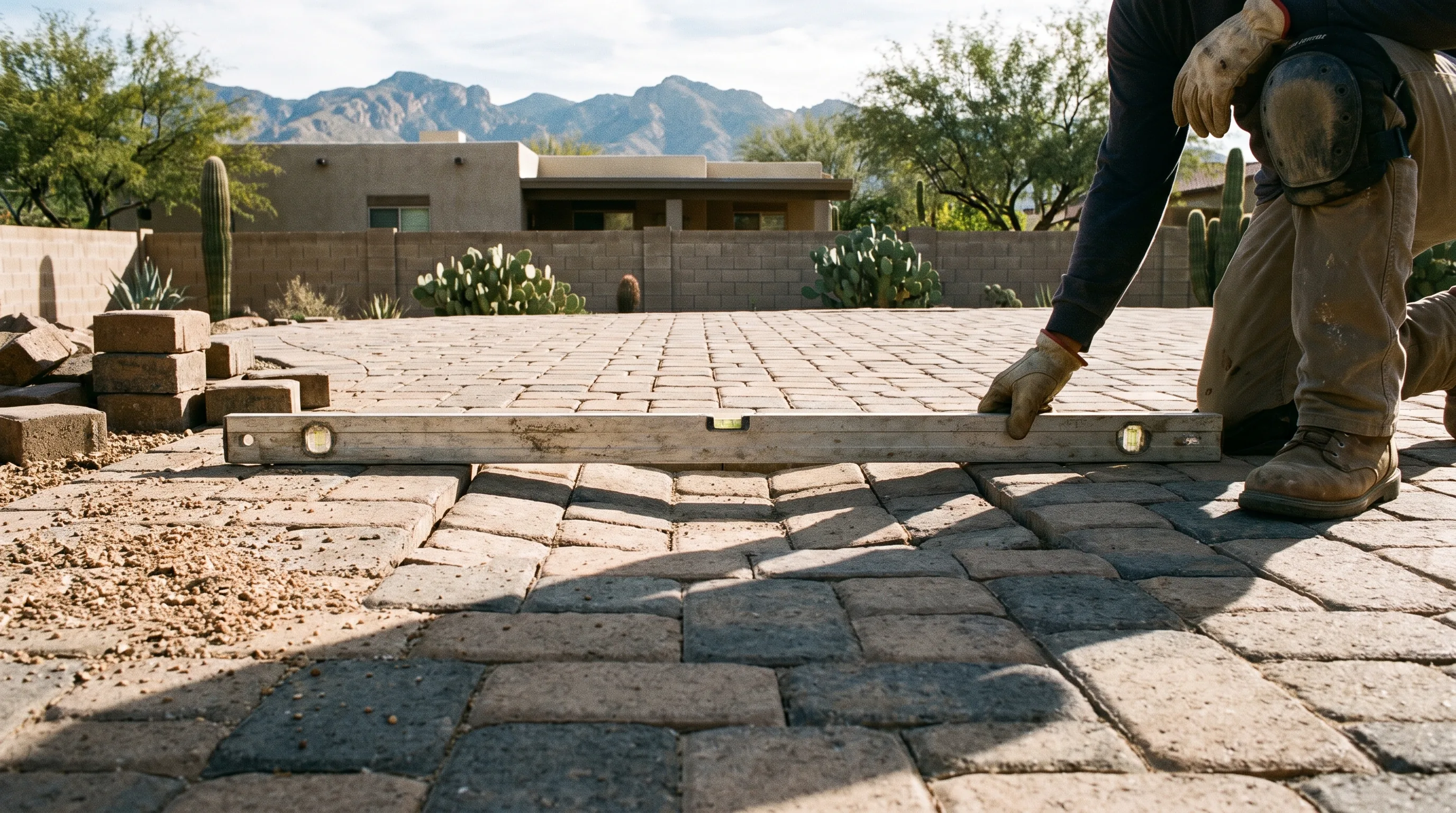
2. Light coloured pavers, tan, buff and pale grey
Very close behind. The joints break the surface up slightly and light concrete pavers reflect a good share of what hits them. This is the workhorse choice for most yards.
3. Light coloured or textured concrete overlays
Cool deck style finishes are light and textured, which is precisely why they exist. A well chosen overlay on a pool deck performs well.
4. Plain grey concrete
Middling. Better than most people assume, and noticeably worse than a genuinely pale surface. It also lightens as it ages, which works in its favour.
5. Decomposed granite
Variable. The material itself is loose and does not store heat the way a slab does, but the golden and darker DG colours absorb a lot and the surface radiates heat upward. Better than dark hardscape, worse than pale hardscape.
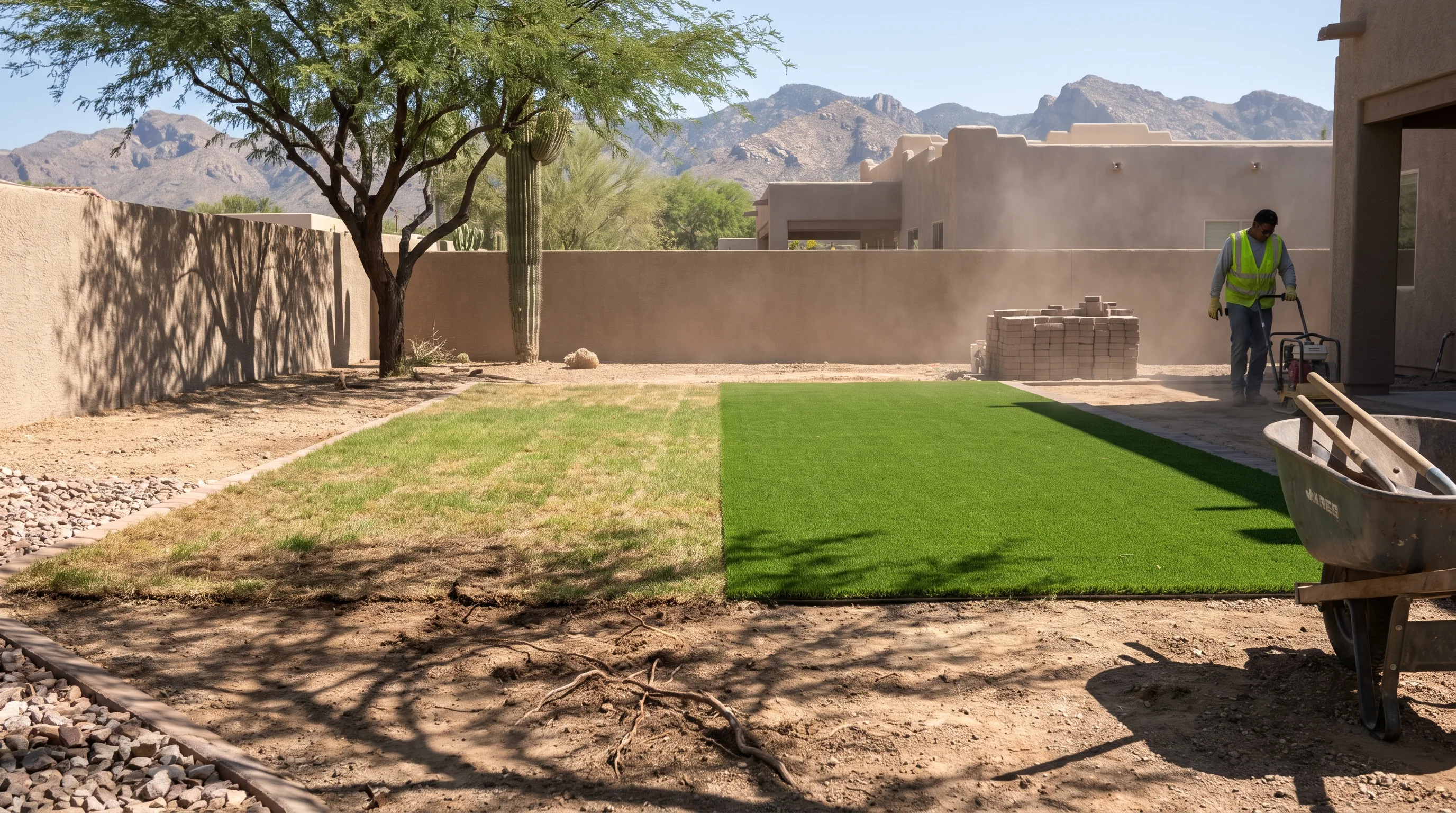
6. Artificial turf
Hotter than most people expect and hotter than concrete in full sun. The blades absorb heat and there is no thermal mass to spread it. This is the single most common surprise on this list.
7. Dark pavers, charcoal and deep brown
Attractive, and genuinely unpleasant barefoot in July. If you want a dark surface, put it where it is shaded or where nobody walks without shoes.
8. Dark stained or stamped concrete in full sun
The hottest common option, combining a dark colour with the thermal mass of a slab, which means it holds heat well into the evening.
Shade is the actual answer
Any surface on this list, under a solid roof, is comfortable. That is not a small effect and it is not a partial improvement. Removing direct sun removes the mechanism that heats the surface in the first place.
This is why we push shade before material on almost every project. A ramada over a patio does more for summer usability than any material upgrade you can buy for the same money, and it keeps working in twenty years when the surface colour has softened.
Two practical notes. An open topped pergola filters sun rather than removing it, so it helps but does not deliver the same result as a solid roof. And a tree that will eventually shade a patio is worth planting immediately, because the eventually arrives faster here than people expect.
Be careful with cool coating claims
Light coloured textured overlays genuinely do reduce surface temperature compared with dark or bare concrete, and that is a real, well understood effect based on colour and texture.
What deserves scepticism is any product claiming a dramatic temperature reduction independent of colour, or claiming to keep a surface comfortable in direct summer sun. Colour is doing most of the work in every case we have seen. If a coating is pale and textured, it will help. If someone is quoting a specific degree reduction, ask what conditions that was measured under.
Getting it right the first time
Surface temperature is one of the few hardscape decisions that is essentially impossible to change later. You can add shade to a dark patio, and that is the usual fix, but you cannot make the surface itself lighter without replacing it.
So it is worth having the conversation before you choose a colour, standing in the actual space, thinking about the hours you will use it. A contractor who does not raise this in a Tucson yard has not thought about it.